Table of Contents
Pan-Seared Steak with Garlic Butter – A Steakhouse Quality Meal at Home

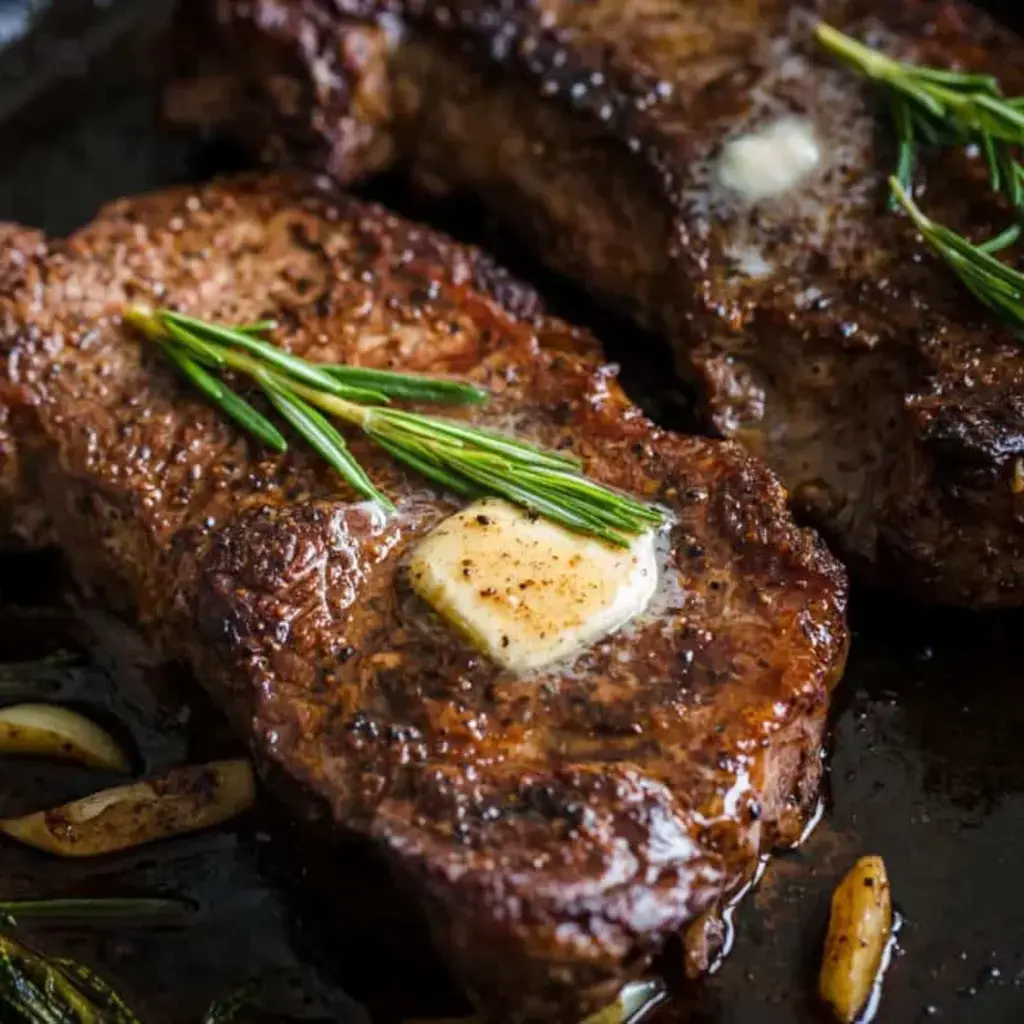
Let me tell you a little secret: the best pan-seared steak I ever made didn’t come from a steakhouse in New York City. It came from my tiny Parisian kitchen, a well-seasoned cast iron skillet, and a technique I learned from my mother’s kitchen back in Morocco — the art of cooking with patience and butter. This pan-seared steak with garlic butter is everything I love about cooking: simple ingredients, bold flavors, and a method that turns an ordinary Tuesday night dinner into a steakhouse quality steak at home. The Maillard reaction on the crust, the way the garlic butter pools around the meat, the fresh rosemary scent filling your kitchen — this is comfort food at its finest.
When I first moved to New York, I missed the warmth of Moroccan spices and the precision of French technique. So I started blending them. For this easy pan-seared steak recipe, I use a cast iron skillet that I bought at a flea market in Brooklyn — it’s seasoned to perfection and gives the steak that beautiful, crispy crust. The garlic butter sauce, enriched with fresh rosemary and a touch of sea salt, is what takes this dish over the top. Every bite is tender, juicy, and packed with flavor. Whether you’re cooking for a date night or just treating yourself after a long week, this recipe is your ticket to a restaurant style steak at home without ever leaving your kitchen.
I’ve tested this recipe dozens of times — at cooking classes, for dinner parties, and on busy weeknights when I needed something fast but impressive. And I can promise you this: if you follow these steps, you will get a perfect seared steak with a golden-brown crust and a melt-in-your-mouth interior. The secret lies in the butter basting technique, which I learned from a French chef in Paris who insisted that butter and thyme are a steak’s best friends. If you’re new to cooking steak, don’t worry — I’ll walk you through every detail. And if you’re a seasoned cook, you’ll find a few tricks to elevate your game. For more tips on getting the temperature just right, check out my complete steak temperature guide.
Why This Pan-Seared Steak Recipe Is the Best
I’ve cooked hundreds of steaks in my career — from the bustling kitchens of Paris to my own tiny New York City apartment. And I can honestly say that this pan-seared steak recipe is the one I turn to again and again. It delivers that steakhouse quality steak at home with minimal fuss and maximum flavor. The garlic butter baste is what sets it apart, infusing the meat with rich, savory depth while keeping the interior perfectly tender. My Moroccan roots taught me to cook with patience and love, and my French training taught me the science of the perfect sear. This recipe is the beautiful intersection of both worlds.
What makes this the best butter for searing steak? It’s all about the basting technique. After the steak develops a beautiful crust on the first side, I add butter, garlic, and rosemary to the pan and spoon that glorious garlic butter over the steak repeatedly. This not only cooks the steak evenly but also creates a deeply flavorful crust that locks in the juices. The result is a tender steak recipe that tastes like it came from a high-end steakhouse, but costs a fraction of the price. And because this is a one pan steak dinner, cleanup is a breeze — which is exactly what we all need on a busy weeknight.
I’ve also designed this recipe to be foolproof for home cooks. You don’t need a grill or special equipment — just a cast iron skillet and a few pantry staples. The steps are straightforward, the timing is clear, and I’ve included visual cues so you know exactly when to flip, when to baste, and when to rest. This is the kind of recipe that builds confidence in the kitchen. Whether you’re a beginner or a seasoned cook, you’ll feel like a professional chef when you plate this steak. For more one-pan inspiration, browse my one-pan dinner collection.
Pan-Seared Steak Ingredients
I buy my steaks from the meat counter at the Union Square Greenmarket in New York City, where the butchers know me by name and always set aside the best cuts. There’s something special about choosing your own steak — feeling the marbling, checking the thickness, knowing exactly where it came from. For this cast iron steak recipe, you want a steak that’s at least 1¼ inches thick so it can develop a beautiful crust without overcooking in the center. Here’s everything you’ll need.
Ingredients List
- 2 lbs New York Strip Steaks (2 steaks) — or Ribeye or Top Sirloin Steaks (1 lb each, 1¼” thick)
- ½ Tbsp vegetable oil (or any high heat cooking oil like canola or extra light olive oil)
- 1½ tsp sea salt
- 1 tsp black pepper (freshly ground)
- 2 Tbsp unsalted butter
- 2 cloves garlic (peeled and quartered)
- 1 sprig fresh rosemary
Ingredient Spotlight
New York Strip Steak: This cut is the star of the show — well-marbled, tender, and packed with beefy flavor. The strip steak has a nice fat cap on one side that renders beautifully when seared. If you can’t find New York strip, a ribeye works wonderfully thanks to its rich marbling, or top sirloin for a leaner option. Look for steaks with even thickness and bright red color with creamy white fat.
Unsalted Butter: This is your flavor vehicle. Unsalted butter allows you to control the salt level yourself, which is especially important when you already use sea salt for seasoning. The butter combines with the garlic and rosemary to create that classic garlic butter steak baste that makes this recipe so special. For a dairy-free version, you can use a high-quality plant-based butter.
Fresh Rosemary: Aromatics matter. Fresh rosemary adds an earthy, pine-like fragrance that cuts through the richness of the butter and steak. I prefer fresh over dried here because it releases its oils slowly during basting. Thyme is also a fantastic option if you want to experiment — it’s what I used in Paris and it pairs beautifully with garlic. For more ideas, check out my homemade garlic herb butter recipe.
| Original Ingredient | Best Substitution | Flavor / Texture Impact |
|---|---|---|
| New York Strip Steak | Ribeye or Top Sirloin | Ribeye is richer and more tender; sirloin is leaner with a firmer bite |
| Unsalted Butter | Clarified butter or ghee | Higher smoke point, nuttier flavor; ghee adds a subtle caramel note |
| Fresh Rosemary | Fresh thyme or fresh oregano | Thyme is more delicate with a lemon-pepper note; oregano adds a Mediterranean twist |
| Vegetable Oil | Canola oil, avocado oil, or grapeseed oil | All neutral and high-heat; avocado oil has a slightly higher smoke point |
How to Make Pan-Seared Steak — Step-by-Step
This is the moment you’ve been waiting for. Making a pan-seared steak at home is easier than you think, and I promise you will feel like a professional chef by the time you plate this beauty. Follow these steps closely and you’ll get a perfect seared steak with a gorgeous crust and a tender, juicy interior every single time.
Step 1: Prep and Season the Steaks
Thoroughly pat your steaks dry with paper towels. This is one of the most important steps for achieving a great crust on a pan-seared steak. Any moisture on the surface will steam the meat instead of searing it, so take your time and make sure both sides are completely dry. Just before cooking, generously season both sides with 1½ tsp sea salt and 1 tsp freshly ground black pepper. The salt draws out a little moisture and then dissolves into the surface, creating a brine that helps build that deep, caramelized crust. Season right before cooking — if you season too early, the salt will draw too much moisture out and you’ll end up with a wet surface.
💡 Lora’s Pro Tip: For an even better crust, let your seasoned steaks sit at room temperature for 15–20 minutes before cooking. This allows the salt to penetrate the surface and helps the steak cook more evenly. Cold steak straight from the fridge will cool down your pan and make it harder to get a good sear.
Step 2: Sear the Steaks
Heat your cast iron skillet over medium-high heat until it’s hot — a drop of water should sizzle and evaporate immediately when it hits the pan. Add ½ Tbsp vegetable oil and swirl to coat. Once the oil is shimmering and very hot, carefully place the steaks in the pan away from you to avoid oil splatter. Sear the steaks on the first side for 4 minutes without moving them — resist the urge to peek or shift the steak. You want a deep, brown crust to form. Flip the steaks and cook for another 3–4 minutes on the second side. Then, using tongs, turn each steak on its edges to render the fat cap and sear all sides — about 1 minute per edge. This step is what gives you that steakhouse quality steak at home look with a beautifully browned exterior all around.
⚠️ Common Mistake to Avoid: Do not overcrowd the pan. If you’re cooking two steaks, make sure they have enough space between them. If the pan is too crowded, the temperature drops and the steaks will steam instead of sear. Use a large cast iron skillet or cook the steaks in batches if needed.
Step 3: Baste with Garlic Butter
Reduce the heat to medium and immediately add 2 Tbsp unsalted butter, quartered garlic cloves, and a fresh rosemary sprig to the pan. As the butter melts, tilt the pan slightly so the butter pools to one side. Using a large spoon, scoop up the garlic butter and spoon it over the tops of the steaks repeatedly. This basting technique is the heart of this easy pan-seared steak recipe — it infuses the meat with garlic and rosemary flavor while continuing to cook the top of the steak gently. Continue spooning the sauce over the steak for about a minute, or until the steak reaches an internal temperature about 5–10 degrees below your desired doneness. Remember, the temperature will continue to rise another 5–10 degrees while the steak rests (this is called carryover cooking).
💡 Lora’s Pro Tip: Use an instant-read thermometer for precision. For medium-rare, aim for 125–130°F before resting. For medium, aim for 135–140°F. The butter basting not only adds flavor but also helps cook the top side of the steak without needing to flip it again. This is how you get a perfect seared steak that’s evenly cooked throughout.
Step 4: Rest and Serve
Transfer the steaks to a cutting board and loosely tent them with aluminum foil. Let them rest for 10 minutes — this is non-negotiable. Resting allows the juices to redistribute throughout the meat so every slice is tender and flavorful. If you skip this step, the juices will run out onto the cutting board and you’ll end up with a dry steak. After resting, slice the steak against the grain into ½-inch strips. Spoon the remaining garlic butter sauce from the pan over the sliced steak. The butter, now infused with garlic and rosemary, is liquid gold — don’t waste a drop. Serve immediately and prepare to be amazed at how restaurant style steak at home can taste so extraordinary.
⚠️ Common Mistake to Avoid: Never skip the resting step. I know it’s tempting to cut into that beautiful pan-seared steak right away, but resting is what guarantees a juicy, tender result. Ten minutes is all you need. Use this time to finish your sides, set the table, or pour yourself a glass of wine.
| Step | Action | Duration | Key Visual Cue |
|---|---|---|---|
| 1 | Pat dry and season | 2 minutes | Surface is visibly dry, salt and pepper evenly adhered |
| 2 | Sear first side | 4 minutes | Deep golden-brown crust forms on bottom edge |
| 3 | Sear second side | 3–4 minutes | Even browning, edges beginning to caramelize |
| 4 | Sear edges | 1 min per edge | Fat cap is rendered and golden, edges are browned |
| 5 | Butter baste | 1–2 minutes | Butter is foaming and golden, garlic sizzles, steak glistens |
| 6 | Rest | 10 minutes | Juices settle, steak firms slightly, internal temp rises |
Serving & Presentation
Plating a pan-seared steak is an art form, and I learned it in the heart of Paris. I like to slice the steak against the grain into ½-inch strips and fan them out on a warm plate. Drizzle the reserved garlic butter sauce from the pan over the top — those little bits of garlic and rosemary are packed with flavor. A sprinkle of flaky sea salt and a few cracks of fresh black pepper finish the dish beautifully. I often serve this with roasted asparagus or a simple arugula salad dressed with lemon vinaigrette. The peppery greens contrast beautifully with the rich, buttery steak.
Growing up in Morocco, my mother always served meat with a side of warm bread and fresh herbs. I’ve carried that tradition into my New York kitchen — crusty sourdough or a warm baguette is perfect for sopping up the garlic butter sauce. For a complete steakhouse quality steak at home experience, pair this with creamy mashed potatoes or roasted mushrooms. And don’t forget the wine — a bold Cabernet Sauvignon or a smooth Malbec complements the richness of the steak and butter beautifully. For more pairing ideas, check out my best side dishes for steak guide.
| Pairing Type | Suggestions | Why It Works |
|---|---|---|
| Side Dish | Roasted asparagus, creamy mashed potatoes, sautéed mushrooms | Earthy, simple sides let the steak shine; potatoes soak up the garlic butter sauce |
| Sauce / Dip | Extra garlic butter sauce, chimichurri, horseradish cream | Chimichurri adds freshness and acidity to cut through the richness |
| Beverage | Cabernet Sauvignon, Malbec, or a dark Old Fashioned | Bold reds match the beef’s richness; the cocktail adds a smoky, sophisticated note |
| Garnish | Flaky sea salt, fresh rosemary sprig, cracked black pepper | Adds visual appeal and a final burst of flavor and aroma |
Make-Ahead, Storage & Reheating
This easy pan-seared steak recipe is perfect for meal prep, especially if you’re navigating a busy New York City schedule like I am. I often cook two steaks at once — one for dinner and one for lunch the next day. The key to storing steak properly is to keep it whole (slice only before serving) and store it in an airtight container with a splash of the garlic butter sauce to keep it moist. Steak can be stored in the refrigerator for up to 4 days and reheated gently to maintain its tenderness.
| Method | Container | Duration | Reheating Tip |
|---|---|---|---|
| Refrigerator | Airtight glass container with a drizzle of reserved butter sauce | Up to 4 days | Reheat gently in a low oven (275°F) for 8–10 minutes or in a covered skillet over low heat with a splash of broth or water to prevent drying |
| Freezer | Wrap tightly in plastic wrap, then foil, then place in a freezer-safe bag | Up to 3 months | Thaw overnight in the refrigerator, then reheat gently in a covered skillet or low oven; add a fresh pat of butter before serving for extra moisture |
| Make-Ahead | Cook the steak, slice, and store with butter sauce in an airtight container | Up to 2 days in advance | Reheat sliced steak in a hot skillet with a little butter for 1–2 minutes per side; the steak will stay tender if you don’t overcook it |
My favorite way to reheat leftover pan-seared steak is in a hot cast iron skillet with a tiny pat of butter. I add the sliced steak and let it sizzle for about 30 seconds per side — just enough to warm through without drying it out. If the steak seems a little dry, I add a tablespoon of water or beef broth to the pan and cover it briefly to create steam. This brings back the moisture and keeps the meat tender. Never use a microwave for reheating steak — it will toughen the meat and ruin the texture you worked so hard to achieve.
Variations & Easy Swaps
| Variation | Key Change | Best For | Difficulty Impact |
|---|---|---|---|
| Moroccan Spice Crust | Add 1 tsp cumin, ½ tsp paprika, and ¼ tsp cinnamon to the salt and pepper | A warm, aromatic twist that pairs beautifully with the garlic butter | Easy — no change in technique, just add spices |
| Dairy-Free Garlic Butter | Replace unsalted butter with a high-quality plant-based butter or ghee | Dairy-sensitive eaters; ghee adds a nutty, caramelized depth | Easy — same basting technique, different fat |
| Herb Butter Swap | Use fresh thyme or tarragon instead of rosemary | Thyme adds a delicate, lemony note; tarragon adds a subtle anise flavor | Easy — simply swap the herb |
Moroccan Spice Crust
Growing up in Morocco, my mother would often season meat with a blend of warm spices that filled our kitchen with the most incredible aroma. For this variation, I add 1 teaspoon of ground cumin, ½ teaspoon of sweet paprika, and a pinch of cinnamon to the sea salt and pepper before seasoning the steak. The cumin and paprika complement the garlic butter beautifully, while the cinnamon adds a subtle warmth that you wouldn’t expect but will absolutely love. This is one of my favorite ways to make a pan-seared steak feel entirely new. The spices toast slightly in the hot pan, creating an extra layer of flavor in the crust. For more ideas on how to season your cast iron skillet for perfect results every time, check out my cast iron seasoning guide.
Dairy-Free Garlic Butter
If you’re avoiding dairy, this variation is for you. Swap the unsalted butter for a high-quality plant-based butter that’s designed for high-heat cooking — look for one with a high fat content and minimal additives. Ghee is also an excellent option if you tolerate lactose-free dairy; it has a higher smoke point than butter and adds a beautiful, nutty depth to the garlic butter baste. The basting technique works exactly the same way, and the fresh garlic and rosemary still infuse the fat with incredible flavor. I’ve tested this with several plant-based butters and the results are consistently excellent — you still get that steakhouse quality steak at home experience without any dairy. The texture of the steak remains tender and juicy, and the crust develops beautifully.
Herb Butter Swap
On any given Saturday, you’ll find me at the Union Square Greenmarket in Manhattan, loading up on fresh herbs for the week. If rosemary isn’t your favorite, or if you simply want to experiment, fresh thyme is a wonderful alternative. Thyme has a more delicate, slightly lemony flavor that pairs beautifully with the garlic and butter. Another option is fresh tarragon, which adds a subtle anise note that’s absolutely lovely with beef. The technique remains exactly the same — add the herb sprig to the pan with the butter and garlic, and baste as directed. This simple swap changes the entire character of the dish while keeping it firmly rooted in the easy pan-seared steak recipe you already love.
What is the best pan for searing steak?
The best pan for searing steak is a cast iron skillet. Cast iron retains heat exceptionally well and distributes it evenly, which is essential for creating that deep, golden-brown crust on a pan-seared steak. It also goes from stovetop to oven seamlessly if you need to finish cooking a thicker cut. If you don’t have cast iron, a heavy-bottomed stainless steel skillet is your next best option — look for one with a thick base that can hold steady heat. Avoid non-stick pans for searing, as they don’t get hot enough to create the Maillard reaction that gives steak its signature crust.
How long do you pan sear a steak?
For a 1¼-inch thick New York strip steak, you’ll sear the first side for 4 minutes and the second side for 3–4 minutes, followed by searing the edges for 1 minute each. After that, you’ll baste with garlic butter for 1–2 minutes, then rest for 10 minutes. Total cook time is about 10–12 minutes for medium-rare. For thicker steaks, add 1–2 minutes per side. The exact timing depends on your steak’s thickness and your desired doneness — always use an instant-read thermometer to confirm. The key to a perfect seared steak is a hot pan and patience; don’t rush the initial sear.
Should you put butter in the pan when searing steak?
You should not add butter at the very beginning of searing, because butter has a lower smoke point than oils like vegetable or canola oil and will burn before the steak develops a good crust. Instead, sear the steak in a high-heat oil first (like vegetable or canola oil) to build that beautiful brown crust, then add the butter at the end for basting. This is the classic butter basting technique: once the steak is seared on both sides, reduce the heat to medium, add butter, garlic, and herbs, and spoon the melted butter over the steak. This gives you the best of both worlds — a perfect crust and rich, buttery flavor.
What temperature should the pan be for searing steak?
Your pan should be medium-high to high heat, around 400–450°F, when you add the steak. A good test: flick a drop of water onto the pan — if it sizzles and evaporates immediately, the pan is ready. If the water beads up and dances across the surface (called the Leidenfrost effect), that’s also a sign you’re at the right temperature. I heat my cast iron skillet over medium-high heat for about 3–4 minutes before adding the oil. The key is to let the pan get fully hot before adding the steak so you get an immediate sear. If the pan isn’t hot enough, the steak will steam and you won’t get that deep, caramelized crust.
Do you cook steak in butter or oil?
The best approach is to use both — oil for the initial sear and butter for the final baste. Start with a high-heat oil like vegetable, canola, or avocado oil to sear the steak at high temperature. These oils have high smoke points (400°F+), allowing the pan to stay hot enough to create a crust. Then, after flipping the steak, reduce the heat and add butter for basting. The butter adds richness and flavor that oil alone can’t provide, and basting with it keeps the steak moist. This combination is what gives you a steakhouse quality steak at home with a perfectly browned exterior and a tender, juicy interior. This is the best butter for searing steak technique because it maximizes both crust and flavor.
How do you get a good crust on a pan-seared steak?
Getting a good crust on a pan-seared steak comes down to three things: dry surface, hot pan, and patience. First, pat your steak completely dry with paper towels — moisture is the enemy of a good crust. Second, preheat your cast iron skillet over medium-high heat until it’s very hot before adding the oil. Third, once the steak hits the pan, don’t move it for 4 minutes. Let the heat do the work. The Maillard reaction — the browning of proteins and sugars — needs time and high heat to create that deep, golden-brown crust. If you try to flip too early, the steak will stick and the crust won’t form properly. Season generously with salt and pepper just before cooking for the best results.
Should you let steak rest after pan searing?
Yes, absolutely — letting your steak rest after pan searing is one of the most important steps in this entire recipe. Resting allows the juices that have been pushed to the center of the steak during cooking to redistribute evenly throughout the meat. If you cut into the steak immediately, those juices will run out onto the cutting board, leaving you with a dry, less flavorful steak. Rest your pan-seared steak for 10 minutes loosely covered with foil. The internal temperature will continue to rise by 5–10 degrees during this time (carryover cooking), so remove the steak from the pan when it’s about 5 degrees below your target doneness. Patience here pays off with every juicy, tender slice.
Can I use a different cut of steak for this recipe?
Absolutely! This easy pan-seared steak recipe works beautifully with several cuts. Ribeye is my top alternative — it has more marbling than New York strip, which means it’s incredibly tender and flavorful. Top sirloin is a leaner but still delicious option that’s often more budget-friendly. For both cuts, follow the same cooking technique: pat dry, season generously, sear in a hot cast iron pan, and baste with garlic butter. The cooking time may vary slightly depending on thickness — use an instant-read thermometer to check doneness. For a tender steak recipe that’s consistently delicious, I recommend sticking with steaks that are at least 1¼ inches thick for the best sear-to-interior ratio.
Can I add other herbs to the garlic butter?
Yes, you can absolutely customize the garlic butter with your favorite herbs. Fresh thyme is a classic choice that adds a delicate, lemony note — I often use it alongside or instead of rosemary. Fresh oregano adds a Mediterranean twist, while fresh tarragon brings a subtle anise flavor that pairs surprisingly well with beef. You can also add a crushed garlic clove or two extra if you’re a garlic lover. The technique stays the same: add the herbs and garlic to the pan after reducing the heat, then baste the steak continuously. This versatility is what makes this the best butter for searing steak — you can adapt the flavor profile to suit your mood or what you have in your fridge. Experiment and find your favorite combination!
How do I know when my steak is done without a thermometer?
While an instant-read thermometer is the most reliable way to check doneness, you can use the hand-test method if you don’t have one. Touch the fleshy part of your palm just below your thumb, then touch your thumb to your index finger — that firmness is what medium-rare feels like. For medium, touch your thumb to your middle finger. For well-done, touch your thumb to your pinky. Compare the firmness of the steak to these reference points. However, I strongly recommend investing in a good instant-read thermometer for this cast iron steak recipe — it takes the guesswork out and guarantees consistent results every time. A quick steak dinner shouldn’t be a guessing game, and a thermometer is the best tool for achieving a perfect seared steak.
Share Your Version!
I absolutely love hearing how this recipe turns out in your kitchen. Every time someone tells me they made this pan-seared steak for a date night or a family dinner and it was a hit, it makes my day. Did you try the Moroccan spice crust? Did you use thyme instead of rosemary? I want to know! Leave a star rating and a comment below — your feedback helps other home cooks find their confidence in the kitchen too. And if you’re on social media, snap a photo of your steak and tag me @ingredientidea. I love seeing your creations and sharing them with the community.
One question for you: what’s your favorite side dish to serve with a perfect seared steak? I’m always looking for new ideas and combinations, so drop your suggestions in the comments. Whether it’s a classic like creamed spinach or something unexpected like roasted vegetables with harissa, I want to hear about it. From my NYC kitchen to yours — I hope this recipe brings as much warmth to your table as it does to mine. — Lora 🧡
Love This Recipe? Save It to Pinterest!
If you enjoyed this Pan-Seared Steak with Garlic Butter recipe, don’t let it get lost in your browser tabs! 😄 Pin it now so you can find it again anytime — and explore hundreds more tried-and-tested recipes waiting for you on my Pinterest boards.
👉 Follow Lora on Pinterest @ingredientidea📌 Pin this recipe · 🔁 Re-pin your favorites · 💬 Tag me when you make it — I love seeing your creations!
Pan-Seared Steak with Garlic Butter
This Pan-Seared Steak has a garlic butter that makes it taste like a steakhouse quality meal. You’ll be impressed at how easy it is to make the perfect steak that’s seared on the outside, and perfectly tender inside.
Ingredients
- 2 lbs New York Strip Steaks (2 steaks) (or Ribeye or Top Sirloin Steaks (1 lb each steak, 1 1/4 thick))
- 1/2 Tbsp vegetable oil (or any high heat cooking oil like canola or extra light olive oil)
- 1 1/2 tsp sea salt
- 1 tsp black pepper (freshly ground)
- 2 Tbsp unsalted butter
- 2 cloves garlic (peeled and quartered)
- 1 sprig fresh rosemary
Instructions
- Thoroughly pat steak dry with paper towels. Just before cooking, generously season with 1 1/2 tsp salt and 1 tsp black pepper
- Heat the cast iron pan until hot then add 1/2 Tbsp oil over medium-high heat, swirling to coat. Once the oil is very hot, add steaks to the skillet. Sear the steaks on the first side for 4 minutes until a brown crust has formed then flip and cook another 3-4 minutes. Using tongs, turn the steak on its sides to render the white fat and sear the edges (1-minute per edge).
- Reduce heat to medium and immediately add 2 Tbsp butter, quartered garlic cloves and rosemary to the pan. Spoon the butter sauce over the steak, tilting the pan to get butter on your spoon. Continue spooning the sauce over the steak for a minute or until the steak is about 5-10 degrees from your desired doneness (the temperature will continue to rise another 5-19 degrees while steaks rest).
- Transfer steak to a cutting board, loosely cover and rest 10 minutes before slicing into 1/2" strips to serve. Spoon extra butter sauce over sliced steak to serve.
Nutrition
- Calories: 542 kcal
- Sugar: 1 g
- Fat: 40 g
- Carbohydrates: 1 g
- Protein: 46 g
Tried This Recipe? Leave a Comment!
Did you make this recipe? I’d love to hear how it turned out! Please leave a comment and a rating below. Your feedback helps other home cooks and supports cheerychop.com!
For more delicious inspiration, follow me on Pinterest!