Table of Contents
Pan Seared Steak with Garlic Butter – Restaurant-Quality at Home

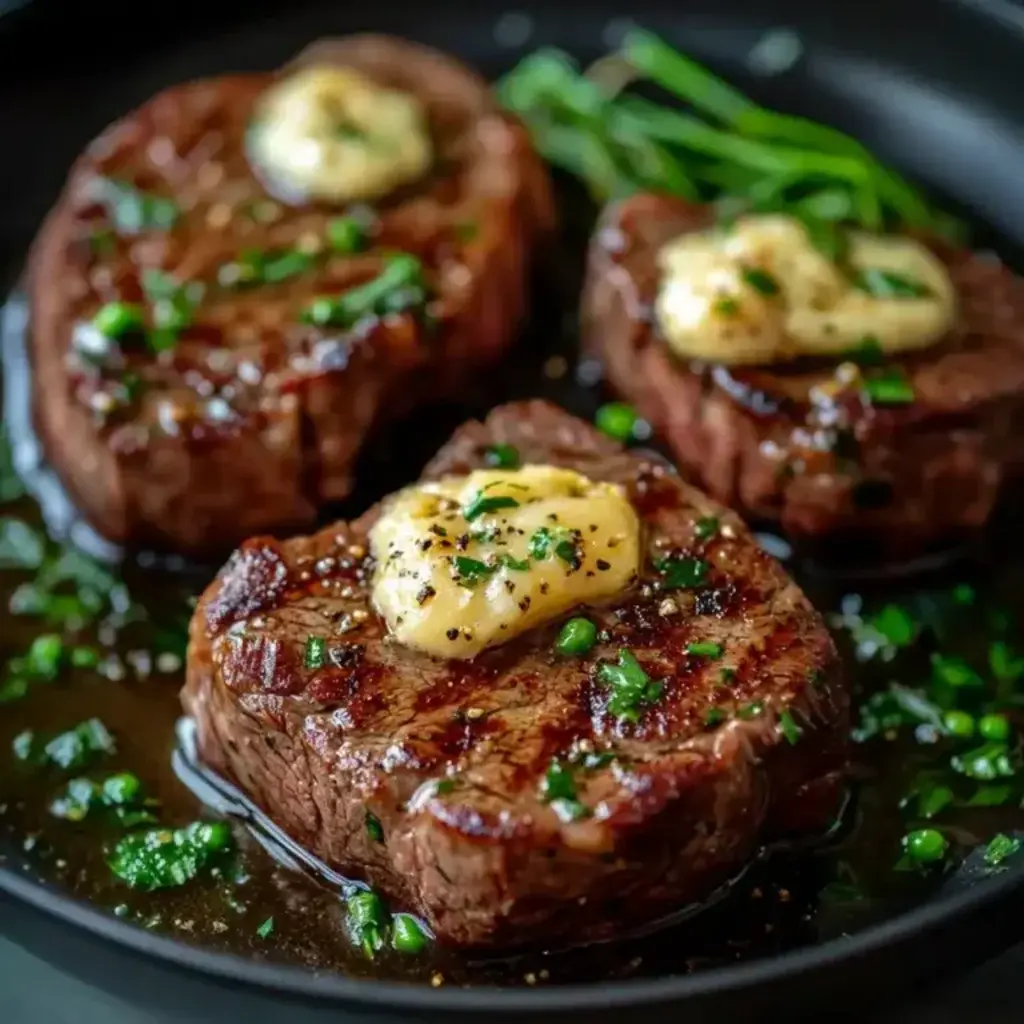
There are few things in life that feel as luxurious as a perfectly cooked Pan Seared Steak with Garlic Butter, and I make it my mission to show you just how simple it really is. Growing up in Morocco, my mother taught me that the best food comes from humble ingredients treated with respect—and that same philosophy guides me every time I step into my New York City kitchen. This Pan Seared Steak with Garlic Butter recipe is a love letter to that idea: a thick ribeye, a screaming-hot cast iron pan, a knob of butter, and a few fragrant cloves of garlic come together in under 15 minutes to create something genuinely magical.
The first time I made this Pan Seared Steak with Garlic Butter after my classical French training in Paris, my chef instructor watched me sear the steak and simply said, “Enfin, tu comprends.” Finally, you understand. What he meant was that a great steak isn’t about fancy techniques—it’s about heat, timing, and basting that garlic butter until it turns nutty and brown. The crust forms a deep mahogany shell, the interior stays supple and pink, and every slice carries the rich aroma of thyme and garlic. If you’ve ever felt intimidated by cooking steak at home, let this Pan Seared Steak with Garlic Butter be the recipe that changes everything.
What sets my version apart is the emphasis on the basting technique I honed in Paris: tilting the pan and spooning hot garlic butter over the steak repeatedly during the final minute of cooking. It creates a flavor depth that dry-seasoned steak simply cannot match. I’ll walk you through each step, share the exact internal temperatures I trust, and point out the one mistake most home cooks make that prevents a truly great crust. Pair this with a simple side of roasted potatoes or a crisp green salad, and you’ve got a dinner that rivals any steakhouse. For another foolproof weeknight staple, be sure to check out my easy chicken recipes for more quick, flavor-packed meals.
Why This Pan Seared Steak with Garlic Butter Recipe Is the Best
The flavor secret behind this Pan Seared Steak with Garlic Butter lies in the technique of basting. After spending years in Parisian kitchens learning sauce work, I can tell you that basting is the single most effective way to infuse a steak with deep, aromatic flavor. The butter browns slightly, the garlic mellows and sweetens, and the thyme releases its oils directly onto the meat. Every bite of this Pan Seared Steak with Garlic Butter carries that layered richness—tangy, savory, and herbaceous all at once. For another dish that benefits from this same basting approach, check out my garlic butter recipes collection.
Perfected texture is what separates a good steak from a transcendent one. I insist on patting the steak bone-dry before it hits the pan—moisture is the enemy of a good sear. The high heat of a cast iron skillet, combined with the oil, creates a crust that crackles when you cut into it, while the interior stays exactly at the temperature you want. This Pan Seared Steak with Garlic Butter achieves that contrast effortlessly when you follow the timing and don’t crowd the pan. Trust the process, and you’ll never order steak out again.
Foolproof and fast—that’s the promise of this Pan Seared Steak with Garlic Butter. You don’t need a grill, a sous-vide machine, or any special equipment. A heavy skillet, a pair of tongs, and a meat thermometer are all you need. Whether you’re cooking for a date night, a family dinner, or just treating yourself after a long week, this recipe delivers consistent results every single time. For more cast iron skillet inspiration, take a look at my cast iron skillet recipes for other one-pan wonders.
Pan Seared Steak with Garlic Butter Ingredients
I source my steaks from the butcher counter at the Union Square Greenmarket here in NYC, where I can see the marbling and pick the thickest cuts. Back in Morocco, my mother would choose meat from the local souk with the same careful eye—looking for fat distribution that promises tenderness. For this Pan Seared Steak with Garlic Butter, the ingredient list is short, so every component matters. Choose wisely, and the reward is immense.
Ingredients List
- 2 ribeye or sirloin steaks (1-inch thick, about 8 ounces each)
- Salt (to taste)
- Black pepper (to taste)
- 1 tablespoon canola oil (or avocado oil)
- 3 tablespoons unsalted butter
- 3 cloves garlic (crushed)
- 1 sprig fresh thyme (or rosemary)
- Optional: Red pepper flakes (to taste)
Ingredient Spotlight
Ribeye or Sirloin Steaks: Ribeye offers the most marbling, which means maximum flavor and tenderness. Sirloin is leaner but still excellent for pan searing. Look for steaks at least 1-inch thick—anything thinner cooks too quickly to develop a proper crust. If using sirloin, let the steak rest an extra 2 minutes before slicing to keep it juicy.
Unsalted Butter: Butter is the soul of this Pan Seared Steak with Garlic Butter. Unsalted butter lets you control the salt level. As it browns in the pan, it develops nutty notes that complement the beef. Do not substitute margarine—the flavor and browning properties are completely different.
Crushed Garlic: Crushing the garlic cloves with the flat side of your knife releases more surface area for the butter to absorb. Whole cloves can burn too quickly, while minced garlic can turn bitter. Crushed is the sweet spot. Use fresh garlic, not pre-minced from a jar—the flavor difference is night and day.
Fresh Thyme or Rosemary: Fresh herbs are non-negotiable here. Dried herbs will scorch and become acrid. Thyme offers a subtle lemony-earthy note; rosemary is more piney and bold. Either works beautifully. Strip the leaves or leave the sprig whole and remove it after basting.
| Original Ingredient | Best Substitution | Flavor / Texture Impact |
|---|---|---|
| Ribeye Steak | New York Strip or Filet Mignon | Strip is slightly leaner but still tender; filet is very lean and benefits from extra butter |
| Canola Oil | Avocado oil or grapeseed oil | All neutral oils with high smoke point; avocado oil adds subtle fruitiness |
| Unsalted Butter | Clarified butter (ghee) | Ghee has higher smoke point and nuttier flavor; skip the basting step if using ghee alone |
| Fresh Thyme | Fresh rosemary or fresh oregano | Rosemary is stronger—use half the amount; oregano adds a Mediterranean note |
How to Make Pan Seared Steak with Garlic Butter — Step-by-Step
Trust me when I say this Pan Seared Steak with Garlic Butter comes together faster than you think. Follow these steps exactly, and you will have a steakhouse-quality dinner on your plate in about 15 minutes of active cooking time.
Step 1: Bring Steaks to Room Temperature
Remove the steaks from the refrigerator 30-60 minutes before cooking. This step is crucial for even cooking—a cold steak will sear on the outside and remain raw in the center while the butter and garlic flavor won’t penetrate as well. Place them on a plate and let them sit uncovered so the surface dries slightly.
💡 Lora’s Pro Tip: If you’re short on time, place the steaks in a sealed plastic bag and submerge them in warm (not hot) water for 10-15 minutes. This speeds up the tempering process without cooking the meat.
Step 2: Pat Dry and Season
Pat the steaks dry with paper towels to remove every bit of surface moisture. This step is non-negotiable—moisture turns to steam, and steam prevents browning. Season both sides very generously with salt and black pepper. Use about 1 teaspoon of salt per steak, pressing it into the meat so it adheres. The salt will draw out a little moisture, but patting dry first minimizes that effect.
⚠️ Common Mistake to Avoid: Don’t season the steak just before it goes into the pan. Season at least 10 minutes beforehand so the salt has time to penetrate the meat fibers rather than just sitting on the surface.
Step 3: Preheat the Pan
Place a cast iron skillet or heavy-bottomed pan over medium-high heat for 4-5 minutes. The pan should be ripping hot—if you flick a drop of water onto it, the water should bead up and dance across the surface. Add the canola oil and swirl to coat the bottom evenly. The oil should shimmer almost immediately.
💡 Lora’s Pro Tip: Use a pan large enough to hold both steaks without touching. If they touch, they steam instead of sear. If your pan is too small, cook the steaks one at a time and keep the first one warm in a low oven.
Step 4: Sear the First Side
Carefully place the steaks in the hot pan, laying them away from you to avoid oil splatter. You should hear an immediate, satisfying sizzle. Let the steaks sear for 4-5 minutes without moving them, nudging, or pressing down. Pressing squeezes out precious juices. Let the heat do the work.
⚠️ Common Mistake to Avoid: Do not flip the steak early to check the crust. The crust needs continuous contact with the hot pan to form properly. Peeking or moving the steak breaks that seal. Trust the 4-5 minute mark and flip only once.
Step 5: Flip and Sear the Other Side
Using tongs, flip the steaks to the second side. Sear for another 4-5 minutes for medium-rare. The second side will develop a slightly less aggressive crust because the pan has cooled somewhat, but this is normal. The overall color should be deep mahogany on both faces with a warm pink center.
💡 Lora’s Pro Tip: For even crust development, use the tongs to hold the steak on its fatty edge for 30-45 seconds after flipping. This renders the fat cap and adds incredible flavor to the entire Pan Seared Steak with Garlic Butter.
Step 6: Add Butter, Garlic, and Thyme
In the last minute of cooking, add the unsalted butter, crushed garlic cloves, and fresh thyme to the pan. The butter will melt quickly and begin to foam. Tilt the pan slightly toward you so the butter pools at the edge, and use a large spoon to baste the melted garlic butter over the steaks repeatedly. Baste 6-8 times per steak for maximum flavor infusion.
⚠️ Common Mistake to Avoid: Don’t add the butter too early—it will burn and turn bitter. The butter should only be in the pan for the final 60-90 seconds of cooking. Keep the heat at medium-high but watch closely; if the butter starts to blacken, remove the pan from the heat briefly.
Step 7: Check Internal Temperature
Use an instant-read meat thermometer to check the internal temperature of the thickest part of the steak. Insert the thermometer from the side, not the top, to get an accurate reading. Remove the steak from the pan when it reaches 5°F below your target temperature—it will continue to rise during resting.
💡 Lora’s Pro Tip: For the most accurate reading, check the temperature in three spots: the center, near the edge, and the thickest area. If there’s more than a 5°F difference, let the steak rest a bit longer to equalize before slicing.
Step 8: Rest and Slice
Transfer the steaks to a cutting board and let them rest for 5-10 minutes. Resting allows the juices to redistribute throughout the meat rather than spilling out onto the board the moment you cut into it. After resting, slice against the grain into ½-inch thick strips for the most tender bite.
⚠️ Common Mistake to Avoid: Never skip the resting step. Cutting into a hot steak immediately causes all the flavorful juices to run out onto the cutting board, leaving you with a dry, less flavorful piece of meat. Be patient—it’s worth every minute.
| Step | Action | Duration | Key Visual Cue |
|---|---|---|---|
| 1 | Temper steaks | 30-60 min | Steaks no longer feel cold to the touch |
| 2 | Pat dry & season | 2 min | Surface is completely dry, salt visibly adheres |
| 3 | Preheat pan | 4-5 min | Oil shimmers, water drop dances on surface |
| 4 | Sear first side | 4-5 min | Deep brown crust forms on bottom edge |
| 5 | Flip & sear second side | 4-5 min | Second side matches first in color |
| 6 | Add butter & baste | 1-1.5 min | Butter foams and turns golden, garlic softens |
| 7 | Check temperature | 10 sec | Thermometer reads 125°F for medium-rare |
| 8 | Rest & slice | 5-10 min | Juices settle, internal temp rises 5°F |
Serving & Presentation
When I serve this Pan Seared Steak with Garlic Butter in my NYC apartment, I like to slice the steak against the grain into thick strips and fan them out on a warm plate. Spoon any remaining garlic butter from the pan over the top—that golden, garlicky fat is liquid gold. I finish with a sprinkle of flaky sea salt and a few fresh thyme leaves for color and aroma. The contrast between the dark crust and the pink interior is absolutely stunning.
For sides, I lean into my French training: a simple potato gratin or crispy roasted fingerlings with rosemary pair beautifully. A bright arugula salad with lemon vinaigrette cuts through the richness of the butter. And if you want to go full Moroccan, serve this Pan Seared Steak with Garlic Butter alongside a warm bowl of couscous tossed with dried apricots and toasted almonds—the sweetness plays beautifully against the savory steak.
| Pairing Type | Suggestions | Why It Works |
|---|---|---|
| Side Dish | Roasted fingerling potatoes, steamed asparagus, creamy polenta | Starchy or green sides absorb the garlic butter sauce beautifully |
| Sauce / Dip | Pan jus with thyme, horseradish cream, chimichurri | Adds brightness, heat, or tang to complement the rich butter |
| Beverage | Full-bodied red wine (Cabernet Sauvignon), dark beer (Stout), sparkling water with lemon | Tannins in red wine cut fat; stout complements charred crust |
| Garnish | Flaky sea salt, fresh thyme leaves, cracked black pepper, lemon zest | Adds texture, freshness, and visual appeal to the finished plate |
Make-Ahead, Storage & Reheating
As a busy cook in New York, I often prepare this Pan Seared Steak with Garlic Butter for meal prep on Sundays. While steak is always best freshly cooked, you can absolutely store leftovers and enjoy them later. Here is exactly how I handle it in my own kitchen—tested through years of cooking for myself and my family.
| Method | Container | Duration | Reheating Tip |
|---|---|---|---|
| Refrigerator | Airtight container, steak whole (not sliced) | Up to 3 days | Reheat in a low oven (275°F) for 8-10 min, then sear 30 sec per side in a hot pan |
| Freezer | Vacuum-sealed or tightly wrapped in plastic + foil | Up to 2 months | Thaw overnight in fridge, then reheat in oven at 275°F for 12-15 min |
| Make-Ahead | Seasoned and patted dry, on a wire rack in the fridge | Up to 24 hours in advance | Let steak sit at room temp 30 min before cooking; proceed with recipe as written |
The key to reheating leftover Pan Seared Steak with Garlic Butter without drying it out is gentle heat. I avoid the microwave at all costs—it turns the steak rubbery and cooks the pink center into gray. Instead, I reheat in a low oven and then give it a quick flash in a hot pan with a tiny knob of butter to revive the crust. The garlic butter flavor comes right back to life. If the steak was sliced before storing, add a splash of beef broth to the pan while reheating to keep the meat moist.
For make-ahead convenience, I season the steaks up to 24 hours in advance and leave them uncovered on a wire rack in the refrigerator. This dry-brines the meat, concentrating the flavor and improving the crust. When I come home from a long day, all I have to do is let the steaks temper and then cook them. It turns this Pan Seared Steak with Garlic Butter into a 10-minute dinner on busy weeknights.
Variations & Easy Swaps
| Variation | Key Change | Best For | Difficulty Impact |
|---|---|---|---|
| Moroccan Spice-Crusted Steak | Add 1 tsp ras el hanout to the dry rub | Adventurous palates, North African flavor lovers | Easy (same steps) |
| Dairy-Free Garlic Butter Steak | Replace butter with vegan butter or olive oil + 1 tbsp nutritional yeast | Dairy-free diets, lactose intolerance | Easy (same technique) |
| Herb-Crusted Butter Basting | Add fresh tarragon and sage to the butter along with thyme | French-inspired dinners, special occasions | Easy (no extra steps) |
Moroccan Spice-Crusted Steak
This variation is dear to my heart—it brings the aromas of my mother’s kitchen in Marrakech straight to your dinner table. Mix 1 teaspoon of ras el hanout (a Moroccan spice blend of cumin, coriander, cinnamon, ginger, and turmeric) with the black pepper before seasoning the steaks. The warm, floral spice notes pair beautifully with the garlic butter basting. The technique remains identical, so you get a completely new flavor profile without any extra work. For more North African-inspired dishes, browse my Moroccan-inspired recipes for more ideas.
Dairy-Free Garlic Butter Steak
You do not have to miss out on this Pan Seared Steak with Garlic Butter if you avoid dairy. Replace the unsalted butter with a high-quality vegan butter that contains fat (I like Miyoko’s or Country Crock Plant Butter). Alternatively, use 2 tablespoons of olive oil and add 1 tablespoon of nutritional yeast during basting for a cheesy, savory note. The basting technique works exactly the same way, and the crust forms beautifully. Just be sure the vegan butter has a smoke point above 350°F so it does not burn in the pan.
Herb-Crusted Butter Basting
When I want to impress dinner guests in my NYC apartment, I add fresh tarragon and sage to the butter along with the thyme. Tarragon has a subtle licorice note that cuts through the richness, while sage adds an earthy, almost floral depth. Use 2 sprigs of tarragon and 2 large sage leaves, adding them at the same time as the garlic. The result is a Pan Seared Steak with Garlic Butter that tastes like something from a three-Michelin-star kitchen in Paris. Serve with a side of easy date night dinners inspiration for a complete romantic meal.
What is the best cut of steak for pan searing?
For pan searing, ribeye is the best cut because of its abundant marbling, which keeps the meat juicy and flavorful under high heat. Sirloin and New York strip are excellent alternatives—they are leaner but still tender enough for pan searing. The most important factor is thickness: choose steaks at least 1-inch thick so you have enough time to develop a deep crust without overcooking the interior. Filet mignon works too but requires extra butter basting to compensate for its leanness.
How long do you pan sear a steak for medium-rare?
For a 1-inch thick steak cooked to medium-rare (130°F internal temperature), pan sear for 4-5 minutes on the first side and 4-5 minutes on the second side over medium-high heat. Add the butter, garlic, and thyme during the final minute of cooking and baste continuously. Always use a meat thermometer to confirm doneness, as cooking times can vary based on pan type, steak thickness, and starting temperature. Let the steak rest for 5-10 minutes before slicing to allow the internal temperature to rise another 5°F.
Should you put butter on steak while cooking?
Yes, adding butter to the pan during the final minute of cooking transforms the flavor and texture of the steak. Butter contains milk solids that brown and develop nutty, caramelized notes, while the fat carries the flavors of garlic and thyme directly onto the meat. However, you should not add butter too early—it will burn and turn bitter. The ideal technique is to sear the steak in oil first to build the crust, then add butter only for the last 60-90 seconds of cooking while basting the steak continuously.
Do you cook steak in butter or oil first?
Always cook steak in oil first, not butter. Oil has a much higher smoke point (canola oil smokes at around 400°F, avocado oil at 520°F) compared to butter (which smokes at around 350°F). Starting with oil allows you to achieve the high heat needed for a proper crust without burning the fat. Once the crust is formed and the steak is almost at your desired doneness, you add the butter for basting. This two-step approach gives you the best of both: a deep, crackling crust and rich, buttery flavor.
How do you make garlic butter sauce for steak?
To make garlic butter sauce for steak, melt 3 tablespoons of unsalted butter in the pan after searing the steak. Add 3 crushed garlic cloves and 1 sprig of fresh thyme. Once the butter begins to foam, tilt the pan slightly and use a large spoon to baste the melted garlic butter over the steak repeatedly for about 1 minute. The garlic infuses the butter as it gently cooks, and the thyme releases its oils. Spoon the remaining garlic butter from the pan over the sliced steak before serving for maximum flavor.
Why do you baste steak with butter?
Basting steak with butter serves three crucial purposes. First, it infuses the meat with flavor—the butter carries the aroma of garlic, thyme, and any other aromatics directly onto the steak’s surface. Second, basting keeps the steak moist during the final stage of cooking, preventing the exterior from drying out. Third, the butter helps develop a richer, more complex crust as the milk solids brown and caramelize. Basting is a classic French technique that transforms a simple pan-seared steak into something truly luxurious.
What temperature should steak be for medium-rare?
For medium-rare steak, the target internal temperature is 130°F (54°C) when measured with an instant-read thermometer. Remove the steak from the pan at 125°F because the internal temperature will continue to rise by about 5°F during the resting period (this is called carryover cooking). Medium-rare steak has a warm red center with a slight gradient toward the edges. Always insert the thermometer from the side of the steak for the most accurate reading, and test in the thickest part of the meat.
How do you get a good sear on steak without smoking up the kitchen?
To minimize smoke while still achieving a great sear, use an oil with a high smoke point such as avocado oil or canola oil. Make sure the steak is patted bone-dry before it hits the pan—excess moisture creates steam that causes spattering and smoke. Use a pan that is large enough for the steaks to fit without crowding. Turn on your kitchen exhaust fan and open a window if possible. If smoke does become excessive, reduce the heat slightly and wipe out the pan with a clean cloth before adding the butter for basting.
Should you let steak rest after cooking?
Yes, letting steak rest after cooking is absolutely essential. Resting allows the muscle fibers to relax and the juices to redistribute evenly throughout the meat. If you cut into a steak immediately after cooking, the juices will spill out onto the cutting board, leaving you with a dry, less flavorful piece of meat. Rest the steak on a cutting board or warm plate for 5-10 minutes, loosely tented with foil. During this time, the internal temperature will also rise by about 5°F, so account for this when checking doneness.
Can you use olive oil for pan searing steak?
You can use olive oil for pan searing steak, but it is not the best choice. Extra virgin olive oil has a low smoke point of around 375°F, which means it can burn and develop bitter flavors before the steak is properly seared. If you want to use olive oil, choose light or refined olive oil, which has a higher smoke point (around 465°F). Alternatively, use canola oil or avocado oil for the initial sear, and then add a drizzle of extra virgin olive oil to the butter during basting for its fruity flavor.
Share Your Version!
I absolutely love hearing how this Pan Seared Steak with Garlic Butter turns out in your kitchen. Did you try the Moroccan spice variation? Did you go for a perfect medium-rare or push it to medium-well? Drop a star rating and a comment below—it helps other home cooks find the recipe and know what to expect. I read every single comment and answer questions personally, so do not be shy about asking for help with a specific step. Your feedback makes this community stronger.
If you snap a photo of your Pan Seared Steak with Garlic Butter, share it on Instagram or Pinterest and tag @ingredientidea. I feature my favorites on my stories every week, and there is nothing I love more than seeing your beautifully seared steaks with that glossy garlic butter sauce. From my NYC kitchen to yours — I hope this recipe brings as much warmth to your table as it does to mine. — Lora 🧡
⭐ Loved this recipe? Share it!
Tap the stars to rate it, pin it for later, or tag @ingredientidea on Instagram so I can see your masterpiece!
📌 Save · ⭐ Rate · 💬 Comment · 📸 Share
Love This Recipe? Save It to Pinterest!
If you enjoyed this Pan Seared Steak with Garlic Butter recipe, don’t let it get lost in your browser tabs! 😄 Pin it now so you can find it again anytime — and explore hundreds more tried-and-tested recipes waiting for you on my Pinterest boards.
👉 Follow Lora on Pinterest @ingredientidea📌 Pin this recipe · 🔁 Re-pin your favorites · 💬 Tag me when you make it — I love seeing your creations!
Pan Seared Steak with Garlic Butter
This Pan Seared Steak with Garlic Butter recipe offers a simple yet elegant way to enjoy a restaurant-quality meal at home. With just a few high-quality ingredients and straightforward instructions, you can create a tender, flavorful steak topped with rich garlic butter.
Ingredients
- 2 ribeye or sirloin steaks (1-inch thick, about 8 ounces each)
- Salt (to taste)
- Black pepper (to taste)
- 1 tablespoon canola oil (or avocado oil)
- 3 tablespoons unsalted butter
- 3 cloves garlic (crushed)
- 1 sprig fresh thyme (or rosemary)
- Optional: Red pepper flakes (to taste)
Instructions
- Remove the steaks from the refrigerator 30-60 minutes before cooking to allow them to reach room temperature.
- Pat the steaks dry with paper towels to remove excess moisture, ensuring a better sear.
- Season both sides generously with salt and black pepper.
- Preheat a cast iron skillet or heavy pan over medium-high heat until it is hot.
- Add the canola oil to the pan and swirl to coat the bottom.
- Carefully place the steaks in the hot pan, ensuring they are not crowded. You should hear a satisfying sizzle.
- Let the steaks sear for about 4-5 minutes without moving them.
- Flip the steaks using tongs and sear the other side for another 4-5 minutes.
- In the last minute of cooking, add the butter, crushed garlic, and thyme to the pan.
- Tilt the pan slightly and use a spoon to baste the melted garlic butter over the steaks for added flavor.
- Use a meat thermometer to check the internal temperature:
- Rare: 120°F
- Medium-rare: 130°F
- Medium: 140°F
- Medium-well: 150°F
- Well done: 160°F and above.
- Remove the steaks from the pan and place them on a cutting board.
- Let them rest for 5-10 minutes before slicing to allow the juices to redistribute.
Nutrition
- Calories: 550 kcal

Tried This Recipe? Leave a Comment!
Did you make this recipe? I’d love to hear how it turned out! Please leave a comment and a rating below. Your feedback helps other home cooks and supports cheerychop.com!
For more delicious inspiration, follow me on Pinterest!