Table of Contents
Garlic Sesame Noodles: A 15-Minute Gluten-Free Weeknight Dream – Quick, Flavorful, and Irresistible
Introduction
I still remember the first time I made these Garlic Sesame Noodles. It was a frantic Tuesday in my NYC apartment—after a long day of recipe testing, I had about twenty minutes and a growling stomach. I grabbed a bag of brown rice noodles from my pantry, a few cloves of garlic, and the jar of tahini I always keep on hand. Fifteen minutes later, I was twirling the most incredible noodles around my fork. The garlic had turned golden and nutty, the sesame oil added this deep, toasty aroma, and the sauce—oh, the sauce—was creamy, savory, and just a little spicy. That night, I knew this easy garlic sesame noodles recipe would become a staple in my kitchen. And now I’m sharing it with you: a quick noodle dinner that’s gluten-free, ready before you can order takeout, and can be served hot, cold, or anywhere in between.
What makes these sesame noodle stir fry noodles so special? It starts with the fragrance. Imagine minced garlic sizzling in oil until the edges turn golden—that alone will fill your kitchen with pure comfort. Then you pour in a sauce made from toasted sesame oil, tamari, rice vinegar, honey, and the magical ingredient: tahini. The tahini adds a velvety richness that clings to every strand of noodle, while a touch of sriracha and ground ginger brings warmth and depth. Each bite is a balance of salty, sweet, nutty, and bright—with a little kick at the end. The brown rice noodles stay chewy and tender, absorbing the sauce without getting soggy. It’s a dish that feels both indulgent and light.
I’ve tested this recipe countless times, and I can honestly say it’s the best version of Asian garlic noodles you’ll find. My French culinary training taught me the importance of building flavor in layers, so I developed a technique where you lightly fry the garlic first—not burn it—to get that nutty baseline. Then you simmer the sauce for a few minutes to thicken it just enough, so it coats each noodle like a glaze. A common mistake? Adding the sauce too early or letting it boil too long. But don’t worry—I’ll walk you through every step, including 💡 mia’s Pro Tips along the way. By the end, you’ll have a foolproof dinner that’s as fast as it is delicious.
Why This Garlic Sesame Noodles Recipe Is the Best
The Flavor Secret: The heart of this dish is the sauce—a clever combination of toasted sesame oil, tamari, rice vinegar, and tahini. Tahini is my secret weapon; I learned to use it in my mother’s Moroccan kitchen where it adds richness to everything from dressings to tagines. Here it gives the sauce a creamy, nutty body without dairy. The garlic is gently fried first, then the sauce simmers to meld all the flavors. That two-step technique is pure Paris pastry precision applied to a weeknight stir-fry, and it makes all the difference.
Perfected Texture: Brown rice noodles are naturally gluten-free and have a wonderful chewy bite when cooked just al dente. Most rice noodle recipes end up mushy because they’re overcooked or sauced too early. My trick? Cook them a minute less than the package directions, then toss them with the sauce while they’re still hot—they soak up the flavor without turning to mush. The sauce itself is thickened by a brief simmer, so it clings to every strand instead of pooling at the bottom of the bowl.
Foolproof & Fast: From start to finish, you’ll have this on the table in 20 minutes. No complicated steps, no obscure ingredients you have to hunt for at three different stores. Everything is available at a regular supermarket (or your pantry). I’ve streamlined the process so it’s impossible to mess up: even if you’re a beginner, you can nail this quick noodle dinner on your first try. And if you’re meal-prepping, the noodles actually taste great cold or reheated—a real win for busy weeknights.
Garlic Sesame Noodles Ingredients
I love how simple the shopping list is for this easy garlic sesame noodles recipe. On my last trip to the Union Square farmers market, I picked up a head of local garlic and a bunch of scallions. The rest came from my pantry: brown rice noodles, tamari, toasted sesame oil, tahini, rice vinegar, honey, and sriracha. It’s the kind of meal you can make with items you likely already have. Below is the complete list—no fuss, no extras.
Ingredients List
- 12 ounces brown rice noodles
- 1 tablespoon neutral oil (avocado, olive, or refined coconut oil)
- 6 cloves garlic, finely minced
- ¼–⅓ cup low-sodium soy sauce or tamari (gluten-free if needed)
- 2 tablespoons vegetable broth
- 1½ tablespoons rice vinegar
- 2 tablespoons toasted sesame oil
- 1 tablespoon honey or maple syrup (for vegan)
- 2 tablespoons tahini
- 2 teaspoons sriracha (adjust to taste)
- ½ teaspoon ground ginger
- For garnish: sliced scallions, red pepper flakes, crushed peanuts
Ingredient Spotlight
Brown Rice Noodles: These are my go-to for a gluten-free, whole-grain base. They have a mild flavor and a satisfying chew. Look for brands like Lotus Foods or simply the store brand. If you can’t find them, any long-strand rice noodle works; just adjust cooking time.
Toasted Sesame Oil: This is the star of the show—its deep, nutty aroma is irreplaceable. Always use toasted, not plain sesame oil. I buy it from a tiny Japanese market in the East Village, but it’s available in most grocery stores. Store it in a cool, dark place and use within six months for best flavor.
Tahini: Made from ground sesame seeds, tahini adds creaminess and a subtle nuttiness. I love using Lebanese-style tahini (like Alwadi or Ziyad) for its smooth texture. In a pinch, you can substitute natural peanut butter (thinned with a tablespoon of hot water) for a similar richness, though the flavor will be different.
Garlic: Fresh garlic is a must—no pre-minced stuff! Six cloves might sound like a lot, but it mellows as it cooks and becomes sweet and aromatic. If you’re garlic-shy, start with 4 cloves.
Sriracha: This popular condiment adds heat and a subtle tang. Use the classic rooster brand or a similar chili-garlic sauce. For a milder dish, use only 1 teaspoon or omit entirely—add red pepper flakes at the end for a more controlled kick.
| Original Ingredient | Best Substitution | Flavor / Texture Impact |
|---|---|---|
| Brown rice noodles | Soba noodles (buckwheat) or udon (if not GF) | Soba adds nuttiness; udon is thicker/chewier |
| Toasted sesame oil | Regular sesame oil + few drops sesame seeds toasted in pan | Less intense; more subtle nutty |
| Tahini | Natural peanut butter (thinned with hot water) | Richer, peanutty; less delicate |
| Tamari / soy sauce | Coconut aminos (soy-free) or liquid aminos | Milder, slightly sweeter; still savory |
| Honey | Maple syrup or agave nectar | Similar sweetness; maple adds subtle note |
How to Make Garlic Sesame Noodles — Step-by-Step
This easy garlic sesame noodles recipe comes together in just a few simple steps. I’ll guide you through each one, with pro tips and common mistakes so you get perfect results every time. Let’s start cooking!
Step 1: Cook the Noodles
Bring a large pot of salted water to a rolling boil. Add the brown rice noodles and cook according to package directions, but set a timer for 1 minute less than the recommended time. They should be just al dente—tender but still chewy. Drain and rinse briefly with cold water to stop cooking, then set aside.
💡 mia’s Pro Tip: Rinse the noodles under cold water after draining. This stops them from sticking together and removes excess starch, so the sauce clings beautifully later.
Step 2: Mince the Garlic
Finely mince 6 cloves of fresh garlic. The finer the mince, the faster they’ll cook and the more they’ll melt into the sauce. If you have a garlic press, this is a great time to use it.
⚠️ Common Mistake to Avoid: Don’t use a food processor for garlic—it can turn bitter and creates uneven pieces. Hand-mince for best control.
Step 3: Sauté the Garlic
Heat 1 tablespoon of neutral oil (avocado or olive) in a large skillet over medium heat. Add the minced garlic and spread it in an even layer. Cook, stirring often, until the edges of the garlic turn golden brown—about 2 minutes. Do not let it get dark brown or it will become bitter.
💡 mia’s Pro Tip: Keep the heat at medium, not high. Medium heat gives you time to watch the garlic turn golden without burning.
Step 4: Make the Sauce
While the garlic cooks, whisk together the sauce ingredients in a medium bowl: tamari, vegetable broth, rice vinegar, toasted sesame oil, honey, tahini, sriracha, and ground ginger. Whisk until smooth and no lumps remain—tahini can be stubborn, so take your time.
⚠️ Common Mistake to Avoid: If you skip whisking and just dump everything in, the tahini will form clumps. Whisk thoroughly, or use a small blender for a perfectly smooth sauce.
Step 5: Combine and Simmer
Pour the prepared sauce over the cooked garlic in the skillet. Stir to combine, then let it simmer over medium-low heat for 2–3 minutes. The sauce will thicken slightly as it bubbles. You’ll see it become glossier and start to coat the back of a spoon.
💡 mia’s Pro Tip: Taste the sauce after simmering. If you want more heat, add another dash of sriracha. For more sweetness, a tiny extra drizzle of honey.
Step 6: Toss Noodles with Sauce
Add the drained noodles to the skillet with the sauce. Using tongs, toss gently but thoroughly until every strand is coated. The sauce should cling to the noodles without pooling at the bottom. If it seems dry, add a splash of reserved pasta water or extra veggie broth.
⚠️ Common Mistake to Avoid: Don’t leave the noodles in the hot pan too long after tossing—they can overcook and become mushy. Serve immediately or at room temperature.
Step 7: Garnish and Serve
Transfer the noodles to a serving bowl. Garnish generously with sliced scallions, a sprinkle of red pepper flakes, and crushed peanuts. Serve warm, or let them cool to room temperature for a cold noodle salad. Enjoy!
💡 mia’s Pro Tip: For extra crunch, toast the peanuts in a dry skillet for 2 minutes before crushing. It brings out their natural oiliness and flavor.
| Step | Action | Duration | Key Visual Cue |
|---|---|---|---|
| 1 | Cook noodles | 8–10 min | Al dente, chewy |
| 2 | Mince garlic | 2 min | Fine, uniform pieces |
| 3 | Sauté garlic | 2 min | Golden edges, not brown |
| 4 | Make sauce | 2–3 min | Smooth, no lumps |
| 5 | Simmer sauce | 2–3 min | Thickened, glossy |
| 6 | Toss noodles | 1–2 min | Evenly coated |
| 7 | Garnish & serve | 1 min | Scallions, peanuts, chili flakes |
Serving & Presentation
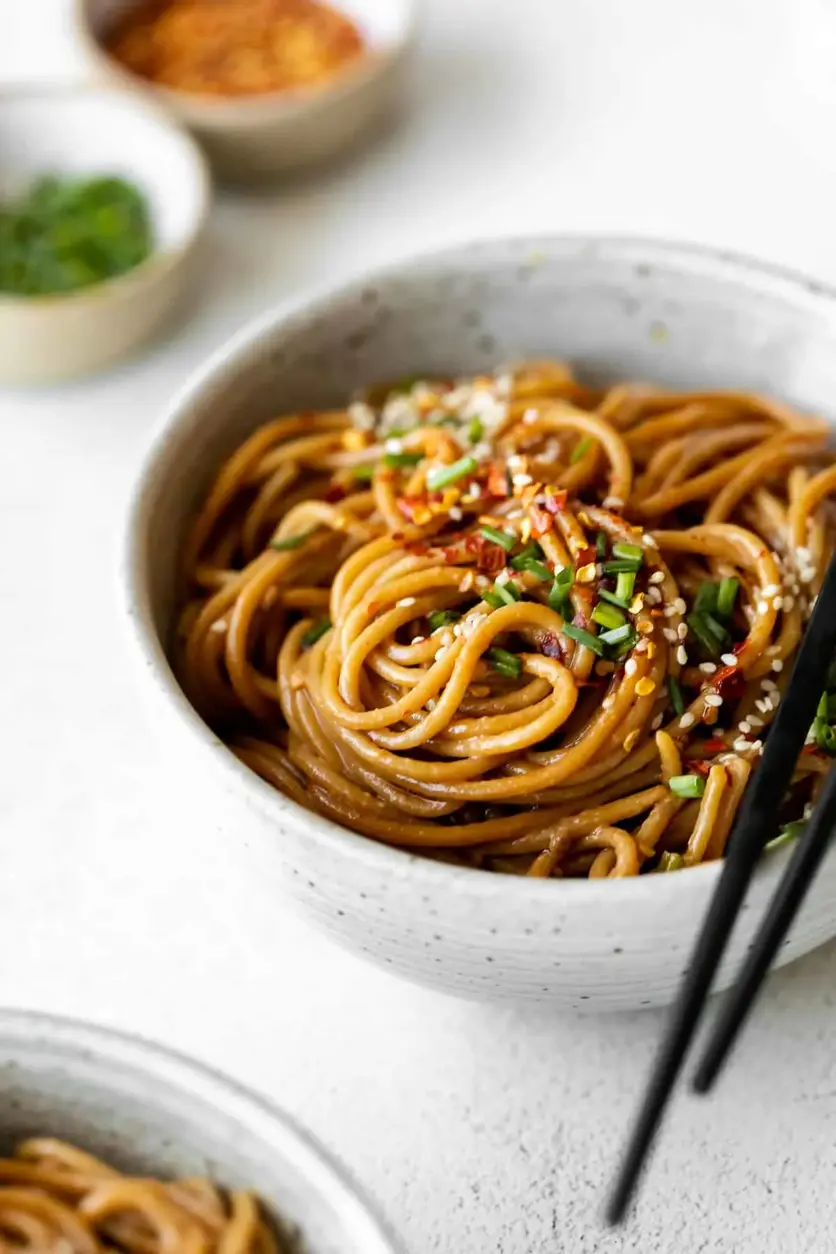
These Garlic Sesame Noodles are incredibly versatile. I love serving them warm as a main dish, but they’re equally delicious cold—perfect for packed lunches or summer picnics. When I plate them, I like to pile the noodles high in a shallow bowl, then shower them with bright green scallions, a pinch of red pepper flakes, and a generous handful of crushed peanuts. The contrast of colors makes the dish as beautiful as it is tasty.
For a truly satisfying meal, pair the noodles with a simple side. In my Moroccan-French style, I often serve them with steamed bok choy or garlicky sautéed spinach—a nod to the quick vegetable sides my mother and I used to make. You can also add a fried egg on top for extra protein, or serve alongside crispy tofu or grilled chicken. A refreshing cucumber salad with rice vinegar and sesame seeds complements the richness perfectly.
| Pairing Type | Suggestions | Why It Works |
|---|---|---|
| Side Dish | Steamed bok choy, sautéed spinach, cucumber salad | Light veggies balance the rich sauce |
| Sauce / Dip | Extra sriracha, chili oil, lime wedges | Acidity and heat cut the nuttiness |
| Beverage | Jasmine tea, iced green tea, or a light lager | Clean, crisp flavors complement the sesame |
| Garnish | Toasted sesame seeds, cilantro leaves, fried shallots | Adds texture, color, and extra aroma |
Make-Ahead, Storage & Reheating
As a busy NYC food blogger, I rely on recipes that keep well. These garlic sesame noodles are my go-to for meal prep: they taste just as amazing cold the next day, and can be reheated in minutes. Here’s how to store them for maximum freshness.
| Method | Container | Duration | Reheating Tip |
|---|---|---|---|
| Refrigerator | Airtight container | Up to 4 days | Microwave 1–2 min, or reheat in a pan with a splash of water |
| Freezer | Freezer-safe zip bag (remove air) | Up to 2 months | Thaw overnight in fridge, then pan-fry with a little oil |
| Make-Ahead | Store sauce separately, cook noodles day of | Sauce: 3 days in advance | Combine fresh noodles with reheated sauce for best texture |
A key tip from my time in French kitchens: always add a tiny splash of water or broth when reheating noodles. The sauce can thicken as it sits, and a little moisture brings back that silky coating. I also like to freshen up the garnishes with a new sprinkle of scallions and peanuts just before serving. They add that final crunch that makes the dish feel new again.
Variations & Easy Swaps
One of the best things about this garlic sesame noodles recipe is how adaptable it is. Whether you want to add protein, make it nut-free, or give it a seasonal twist, I’ve got you covered. All swaps have been tested in my NYC kitchen—so you can experiment with confidence.
| Variation | Key Change | Best For | Difficulty Impact |
|---|---|---|---|
| Add Protein – Tofu or Chicken | Add 8 oz pan-seared tofu or 1 lb cooked shredded chicken | Fuller meal, post-workout dinner | Easy (cook protein separately) |
| Extra Spicy | Increase sriracha to 1 tbsp + add chili oil drizzle | Heat lovers | Very easy |
| Nut-Free / Sesame-Free | Replace peanuts with toasted coconut flakes; use sunflower seed butter instead of tahini | Allergies | Moderate (different flavor profile) |
Variation 1: Add Protein – Tofu or Chicken
For a heartier version, I love adding pan-seared tofu. Press a block of extra-firm tofu, cut into cubes, and sauté in a little oil until golden on all sides. Toss it with the noodles and sauce—the tofu soaks up the flavors beautifully. If you prefer chicken, shred a cooked breast or thigh and stir it in. In my Parisian training, we often paired sauces with a simple protein, and this noodle dish is no exception. The protein turns it into a complete dinner that keeps you full for hours.
Variation 2: Extra Veggie-Packed
Throw in a handful of fresh veggies to boost nutrition and color. Snap peas, julienned bell peppers, shredded carrots, or baby bok choy all work beautifully. I like to sauté them in the same pan after cooking the garlic (before adding the sauce) for about 2–3 minutes until crisp-tender. This is a great way to use up whatever you have from your farmers market haul—a habit I picked up from my mother’s Moroccan kitchen, where nothing goes to waste.
Variation 3: Seasonal Twist – Spring Herbs or Fall Spice
In spring, I swap the peanuts for toasted almonds and add a handful of fresh basil or mint leaves. The herbs add a bright, aromatic note that lifts the whole dish. In fall, I stir in a teaspoon of smoked paprika or cumin along with the ginger—a nod to my North African roots. The warm spices meld wonderfully with the sesame and garlic. Always taste as you go; the great thing about this recipe is that it welcomes improvisation.
How do you make garlic sesame noodles from scratch?
Making garlic sesame noodles from scratch is incredibly easy and takes about 20 minutes. Start by cooking 12 ounces of brown rice noodles according to package directions, but drain them a minute early so they stay chewy. While the noodles cook, finely mince 6 cloves of garlic and sauté them in 1 tablespoon of neutral oil until the edges turn golden—about 2 minutes. In a bowl, whisk together tamari, veggie broth, rice vinegar, toasted sesame oil, honey, tahini, sriracha, and ground ginger until smooth. Pour the sauce into the pan with the garlic and let it simmer for 2–3 minutes to thicken slightly. Toss the cooked noodles with the sauce until fully coated, then garnish with scallions, red pepper flakes, and crushed peanuts. That’s it! You’ll have a flavorful, gluten-free dinner with no special equipment needed.
Can I use a different noodle for garlic sesame noodles?
Absolutely! While brown rice noodles are my go-to for their gluten-free status and chewy texture, you can easily swap them. Soba noodles (buckwheat) add a lovely nutty flavor and are also gluten-free if you choose 100% buckwheat soba. Regular udon noodles are thicker and more substantial, giving a heartier bite. Lo mein or ramen noodles work too, though they’re not gluten-free. If you use fresh noodles, adjust the cooking time and be careful not to overcook—they tend to soften faster. Whatever you choose, aim for a noodle that can stand up to the robust sauce without turning mushy. I’ve tested all these variations in my NYC kitchen, and each brings a slightly different texture, so feel free to experiment with what you have in your pantry.
How long do garlic sesame noodles last in the fridge?
Garlic sesame noodles will keep in the refrigerator for up to 4 days when stored in an airtight container. The sauce continues to meld with the noodles, so the flavors actually deepen over time—many people find them even more delicious the next day! However, the texture will change slightly; the noodles may absorb some sauce and become softer. To restore the original silky coating, reheat them with a tablespoon of water or broth. Microwaving on medium power for 1–2 minutes works great, or you can reheat them in a skillet over medium heat with a splash of liquid. If you anticipate leftovers, I recommend storing the sauce separately and only mixing what you plan to eat immediately. That way, you can enjoy freshly tossed noodles for several days.
What can I add to garlic sesame noodles for extra protein?
There are so many ways to boost the protein in your garlic sesame noodles. My favorite is pan-seared tofu: press a block of extra-firm tofu, cube it, and sauté until golden on all sides before tossing with the noodles. The tofu absorbs the sauce wonderfully. For meat lovers, shredded cooked chicken (rotisserie chicken works perfectly) or sliced grilled steak makes a quick addition. If you want to keep it plant-based, edamame or shelled hemp seeds are excellent options—just stir them in at the end. You can also serve the noodles topped with a fried egg; the runny yolk creates an extra creamy sauce. In my Moroccan-family tradition, we sometimes add chickpeas for a hearty, protein-packed twist. All these additions are simple and turn this side dish into a complete meal in no time.
Can I make garlic sesame noodles vegan?
Yes, this recipe is already vegan-friendly with one simple swap. The original recipe uses honey, but you can easily substitute maple syrup or agave nectar for the same sweetness. Everything else—tahini, tamari, rice vinegar, toasted sesame oil, sriracha—is plant-based. I often use maple syrup in my own cooking; it adds a subtle, caramel-like note that complements the sesame. Just make sure your tamari or soy sauce is vegan (most are, but double-check). Also, if you’re adding protein, choose tofu or chickpeas instead of chicken. This version is 100% plant-based and incredibly satisfying.
Can I use peanut butter instead of tahini?
Yes, you can substitute natural peanut butter for tahini in a pinch. Because peanut butter is thicker and sweeter, you’ll want to thin it with an extra tablespoon of warm water or veggie broth before whisking it into the sauce. The flavor will be distinctly peanutty rather than sesame, which can be delicious—just know it’s a different taste profile. If you have a nut allergy, sunflower seed butter works similarly. I’ve tested both substitutes, and they each create a creamy, rich sauce. The original tahini version is more delicate and authentic to the Asian garlic noodle style, but peanut butter makes a fantastic alternative for a quick pantry meal.
Can I double this garlic sesame noodles recipe?
Absolutely! This recipe doubles easily for a crowd or for meal prep. Simply use 24 ounces of noodles, 12 cloves of garlic, and double all the sauce ingredients. Use a large pot for the noodles and a wide skillet or Dutch oven for the sauce. The only thing to watch is the simmering time: with a larger volume of sauce, it may need an extra minute or two to thicken. You might also need to cook the noodles in batches if your pot isn’t big enough. I often make a double batch on Sundays and pack individual servings for lunch all week. The noodles hold up well in the fridge, and the sauce remains flavorful.
Are garlic sesame noodles spicy?
This recipe is mildly spicy—just enough to add warmth without overwhelming your taste buds. The heat comes from 2 teaspoons of sriracha, which provides a gentle kick with a hint of garlic and tang. If you’re sensitive to spice, you can reduce the sriracha to 1 teaspoon or omit it entirely; the noodles will still be deliciously savory from the tamari and sesame. For those who love heat, feel free to increase the sriracha to 1 tablespoon or add a drizzle of chili oil at the end. The other ingredients—honey, tahini, and ginger—balance the spice beautifully. You can also serve it with extra red pepper flakes on the side so everyone can adjust their own heat level.
Can I serve garlic sesame noodles cold?
Yes, these noodles are fantastic served cold or at room temperature, making them perfect for picnics, lunchboxes, or hot summer days. After tossing the hot noodles with the sauce, let them cool completely before refrigerating. The sauce will cling to the noodles, and the flavors will meld and deepen overnight. When serving cold, I like to freshen up the dish with a squeeze of lime, extra scallions, and a handful of fresh cilantro. You can also toss in crisp veggies like julienned cucumber or shredded carrots for extra crunch. The brown rice noodles stay pleasantly chewy even when chilled. It’s one of my favorite no-reheat lunches—just grab and go!
What should I serve with garlic sesame noodles?
Garlic sesame noodles pair wonderfully with light, fresh sides that balance the rich, savory sauce. Steamed or sautéed green vegetables are classic—try bok choy, broccoli, or snap peas seasoned with a pinch of salt and sesame seeds. A crisp cucumber salad with rice vinegar and a touch of sugar adds a refreshing contrast. For protein, top the noodles with a fried egg, pan-seared tofu, or grilled shrimp. If you want a heartier meal, serve them alongside Korean-style beef or teriyaki chicken. I often make a simple miso soup or a bowl of edamame to start. The noodles are versatile enough to fit into any Asian-inspired menu, and they’re also substantial enough to eat on their own as a quick dinner.
Share Your Version!
I hope this easy garlic sesame noodles recipe becomes as beloved in your kitchen as it is in mine. The combination of savory tamari, nutty tahini, and a hint of spice is simply irresistible—and the fact that it comes together in just 20 minutes makes it a true weeknight hero. If you try it, I’d love to hear how it turned out for you. Did you add any protein? Did you use a different noodle? What garnish did you choose?
Please leave a star rating and a comment below—your feedback helps other readers and inspires me to create more recipes you’ll love. And if you snap a photo, share it on Instagram or Pinterest and tag @exorecipes. I always enjoy seeing your beautiful creations! Don’t forget to pin this recipe so you can find it anytime you need a quick, comforting dinner. From my NYC kitchen to yours — I hope this recipe brings as much warmth to your table as it does to mine. — mia 🧡
Love This Recipe? Save It to Pinterest!
If you enjoyed this Garlic Sesame Noodles recipe, don’t let it get lost in your browser tabs! 😄 Pin it now so you can find it again anytime — and explore hundreds more tried-and-tested recipes waiting for you on my Pinterest boards.
👉 Follow mia on Pinterest @exorecipe
📌 Pin this recipe · 🔁 Re-pin your favorites · 💬 Tag me when you make it — I love seeing your creations!
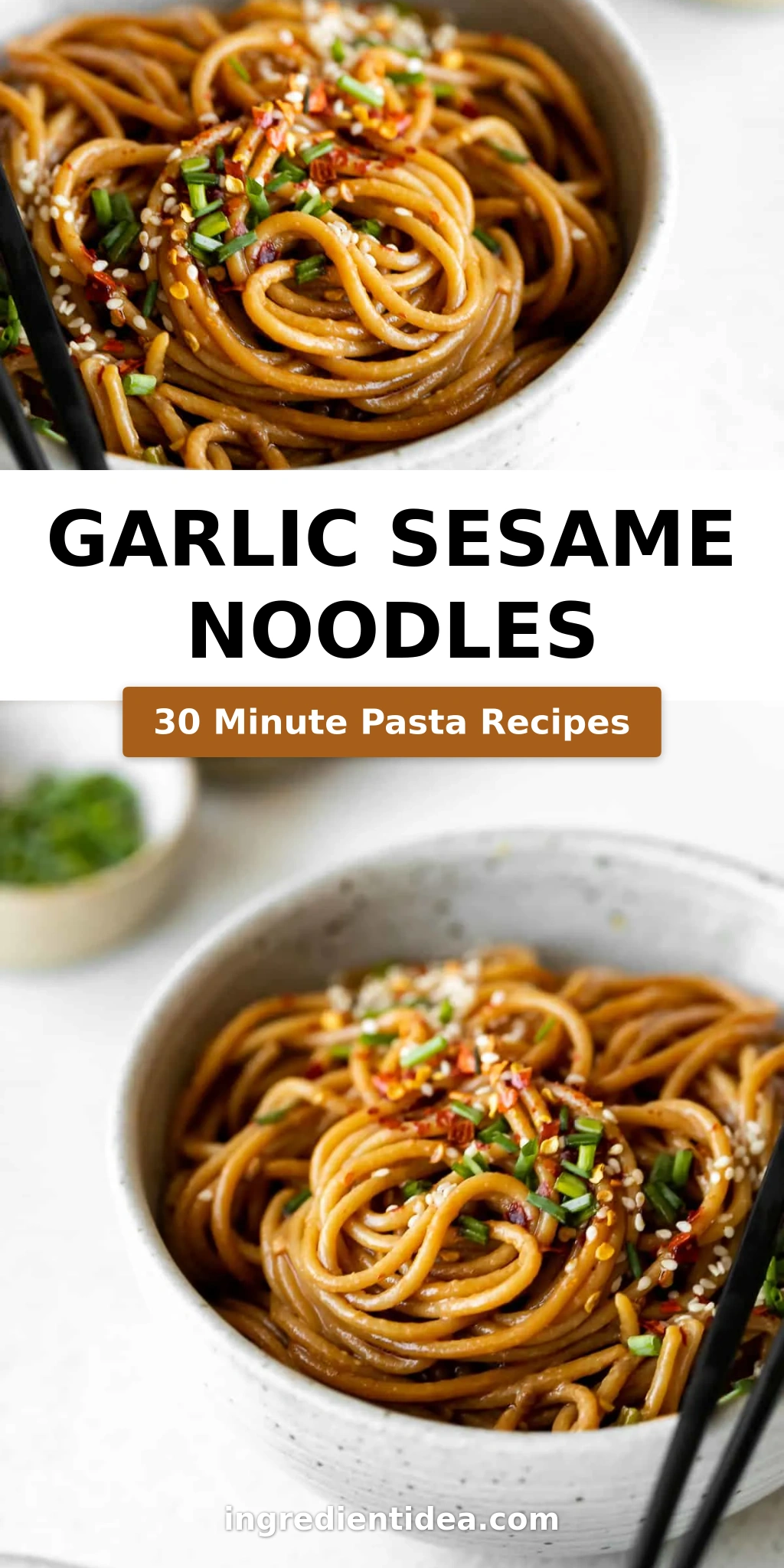
Garlic Sesame Noodles
Noodles are a girls best friend and these easy garlic sesame noodles are without a doubt my favorite noodle recipe to date! They require just a few ingredients, are gluten free, ready in 15 minutes, and can be eaten hot or cold!
Ingredients
- 12 ounces brown rice noodles
- 1 tablespoon oil
- 6 cloves garlic
- 1/4–1/3 cup low sodium soy sauce or tamari
- 2 tablespoons veggie broth
- 1 1/2 tablespoons rice vinegar
- 2 tablespoons toasted sesame oil
- 1 tablespoon honey or maple syrup
- 2 tablespoons tahini
- 2 teaspoon sriracha
- 1/2 teaspoon ground ginger
Instructions
- Bring a large pot of water to a boil and cook the pasta according to package instructions.
- Mince the garlic very finely or use a garlic press to get it super small since we won't be blending up this sauce.
- Add the minced garlic to a pan with the neutral oil. This can be avocado, olive, or refined coconut oil.
- Saute until the edges of the garlic look golden brown.
- Meanwhile, whisk together all of the remaining sauce ingredients in a bowl until there are no visible clumps of ginger and the tahini is spread throughout.
- Pour the sauce into the pan with the garlic and mix well.
- Let simmer for 2-3 minutes or until the sauce thickens slightly.
- When the pasta is done cooking, combine with the sauce.
- Garnish with scallions, red pepper flakes, crushed peanuts and enjoy!
Nutrition
- Calories: 305 kcal
- Sugar: 4.8 g
- Fat: 12.8 g
- Carbohydrates: 47 g
- Protein: 7.2 g
Tried This Recipe? Leave a Comment!
Did you make this recipe? I’d love to hear how it turned out! Please leave a comment and a rating below. Your feedback helps other home cooks and supports cheerychop.com!
For more delicious inspiration, follow me on Pinterest!