Table of Contents
Korean Steak Sandwich with Gochujang Garlic Mayo – Bold, Spicy & Irresistible

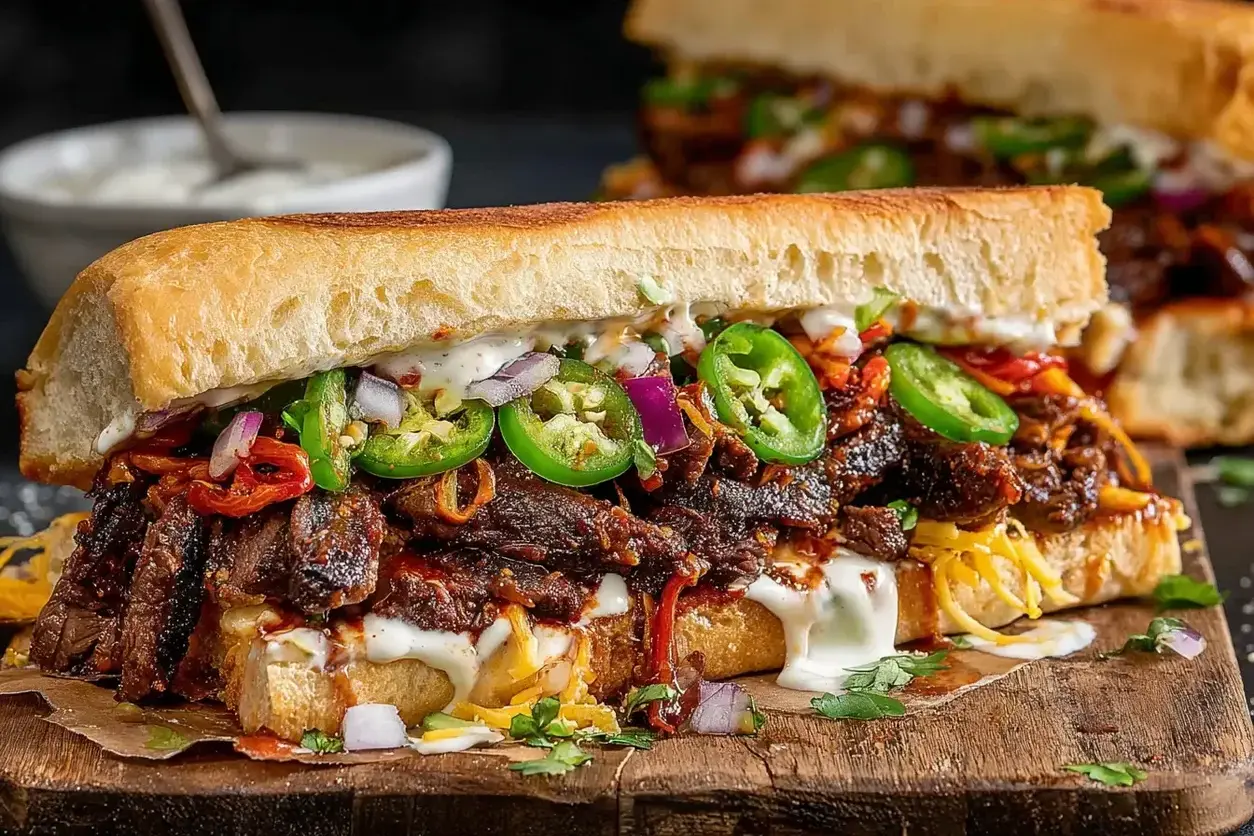
The first time I made a Korean Steak Sandwich, I was standing in my tiny NYC kitchen with a beautiful ribeye from the Union Square greenmarket, and I thought: what if I married the bold, sweet-heat of Korean BBQ with the satisfying crunch of a toasted sandwich? That moment changed my weeknight dinner game forever. This Korean Steak Sandwich is everything I love about fusion cooking — it brings the soulful, caramelized depth of gochujang-marinated ribeye together with creamy garlic mayo, spicy jalapenos, and melty cheddar, all tucked between slices of golden, butter-crusted bread. It’s the kind of Korean beef sandwich recipe that makes you close your eyes and take a second bite before you’ve even swallowed the first. Growing up in Morocco, my mother taught me that the best meals come from layering bold flavors — sweet, spicy, savory — and this spicy Korean sandwich does exactly that, with a French-trained twist from my years in Paris. I cannot wait for you to try this Korean BBQ sandwich in your own kitchen.
What makes this bulgogi steak sandwich so unforgettable is the marinade. It’s not just soy sauce and sugar — we’re using gochujang paste for that deep, fermented heat, grated apple for natural sweetness that tenderizes the beef, and a whisper of toasted sesame oil that ties everything together. When that marinated ribeye hits a screaming-hot skillet, it develops a sticky, caramelized crust that’s pure magic. Then come the bell peppers — cooked in the same pan to soak up every bit of that Korean marinade — followed by jalapenos for heat, scallions for freshness, and a blanket of mature cheddar that melts into all the nooks and crannies. This isn’t just a sandwich; it’s a full sensory experience. If you love Asian fusion dishes as much as I do, you’ll find this recipe hits every note — sweet, spicy, savory, crunchy, and creamy all at once.
I’ve tested this Korean ribeye sandwich more times than I can count, tweaking the marinade ratio, the bread choice, even the way the cheese melts. What I’m sharing today is the version that my family and friends beg for — and the one that finally made my French-trained chef instructors nod in approval. My secret? Freezing the ribeye for 30 minutes before slicing so you can cut it paper-thin, which means every bite is tender and full of marinade. I’ll also show you how to get that perfect crispy-yet-soft toast, how to layer the fillings so nothing slides out, and the one mistake most people make when cooking marinated beef (hint: it involves overcrowding the pan). Whether you’re looking for an easy Korean sandwich recipe for a busy weeknight or a showstopper for game day, this Korean steak sandwich with kimchi vibes (yes, we’re adding kimchi energy through the gochujang and fresh veggies) is going to become your new obsession. For more quick dinner inspiration, check out my easy chicken dinner recipes too.
Why This Korean Steak Sandwich Recipe Is the Best
The Flavor Secret. Most Korean steak sandwich recipes use a simple soy-and-sugar marinade, but I take it further by adding gochujang, grated apple, and a touch of rice wine. The gochujang brings a complex, fermented heat that you just can’t get from Sriracha or red pepper flakes. The apple — yes, a whole grated apple — tenderizes the ribeye naturally while adding a subtle sweetness that balances the spice. This is a technique I borrowed from my Moroccan mother, who would use grated fruit in her lamb marinades, then refined during my French culinary training where we learned that acidity and sweetness are the keys to deeply flavored meat. Every component of this Korean garlic mayo sandwich has a purpose, and the result is a sandwich that tastes like it took hours — but comes together in under an hour.
Perfected Texture. Texture is where this caramelized onion steak sandwich (okay, caramelized peppers in this case) truly shines. The ribeye is sliced thin enough to cook in seconds but thick enough to feel substantial. The bread — I recommend tiger bread or a sturdy brioche — gets brushed with melted butter and toasted until golden and crisp, providing the perfect crunchy vessel for all those juicy fillings. The cheddar melts into a gooey blanket that holds everything together, while the fresh jalapenos and scallions add pops of brightness and crunch. Every bite of this Korean jalapeno sandwich delivers a different texture — crispy bread, tender beef, soft peppers, melty cheese — and that’s what makes it so satisfying.
Foolproof & Fast. I’ve designed this best Korean sandwich recipe to be approachable for any skill level. The marinade comes together in one bowl, the beef cooks in under five minutes, and the sandwiches toast in about four minutes total. Even the garlic mayo is a simple stir-together situation. If you can slice a steak and stir a bowl, you can make this Korean street food sandwich at home with confidence. I’ve also included my best tips for make-ahead prep so you can have the beef marinated and ready to go when hunger strikes. It’s the perfect weeknight dinner that feels like a special occasion. For another quick and satisfying meal, try my gochujang glazed chicken sandwich — it’s a cousin to this recipe and just as delicious.
Korean Steak Sandwich Ingredients
I source my ribeye from the butcher at the Chelsea Market when I’m in NYC — they always have beautifully marbled cuts that make the best Korean steak sandwich. The gochujang I buy from HMart in Koreatown, but you can find it at most well-stocked grocery stores now. There’s something special about the way these ingredients come together — it reminds me of the spice markets in Marrakech, where every vendor would tell you the story behind their blend. Here’s everything you’ll need to make this Korean beef sandwich recipe shine.
Ingredients List
- 2 medium or 1 large ribeye steak (approx. 320g or 0.7 lb) — the star of this Korean ribeye sandwich
- 2 tbsp soy sauce
- 2 tbsp gochujang paste — the heart of the spicy Korean sandwich flavor
- 1 tsp minced ginger
- 2 tbsp light brown sugar
- 2 tbsp rice wine
- 2 garlic cloves, peeled and minced
- ½ tsp black pepper
- 1 sweet apple, grated (no need to peel)
- 1 tbsp toasted sesame oil
- 1 tbsp oil for cooking
- ½ red bell pepper, sliced
- ½ yellow bell pepper, sliced
- 4 thick slices of bread (tiger bread or brioche, approx. 65-75g each) — the perfect base for this Korean BBQ sandwich
- 2 tbsp salted butter, melted
- ¼ tsp sesame seeds
- 75g (2/3 cup) mature cheddar cheese, grated
- ½ small red onion, sliced
- 2 small jalapenos, sliced — for that Korean jalapeno sandwich kick
- 3 spring onions (scallions), sliced into thin strips
- 3 tbsp mayonnaise
- 1 small garlic clove, minced
- 2 tsp sweet chili sauce
Ingredient Spotlight
Ribeye Steak: This is the cut I recommend for the best Korean steak sandwich because of its beautiful marbling. When sliced thin and marinated, the fat renders into the meat, making every bite incredibly tender. Look for steaks with even marbling throughout. If ribeye isn’t available, sirloin or flank steak work well too — just be sure to slice against the grain. The marbling in ribeye ensures this bulgogi steak sandwich stays juicy even after a quick sear.
Gochujang Paste: This fermented Korean chili paste is the backbone of this spicy Korean sandwich. It’s thick, deeply savory, and has a slow-building heat that lingers beautifully. I use the brand “Mother-in-Law’s” or whatever I find at HMart. If you can’t find gochujang, mix 1 tbsp miso paste with 1 tsp Sriracha and a pinch of sugar as an emergency substitute — but the flavor won’t be quite as complex. Gochujang is what gives this Korean BBQ sandwich its signature depth.
Tiger Bread / Brioche: The bread needs to be sturdy enough to hold all the juicy fillings of this Korean steak sandwich with kimchi energy. Tiger bread (also called Dutch crunch) has a wonderful chewy-crisp crust and soft interior. Brioche adds richness. Sourdough works too but will be tangier. Avoid soft sandwich bread — it will get soggy. I always brush the cut sides with melted butter before toasting for that golden, crispy finish that makes this easy Korean sandwich recipe feel extra special.
Cheddar Cheese: I know cheese isn’t traditional in Korean cooking, but trust me on this — mature cheddar adds a sharp, creamy element that balances the heat of the gochujang and the sweetness of the marinade in this Korean garlic mayo sandwich. It melts beautifully and helps hold the sandwich together. You could also use provolone or Monterey Jack for a milder flavor. The cheese is what makes this caramelized onion steak sandwich (with peppers instead) so comforting and satisfying.
| Original Ingredient | Best Substitution | Flavor / Texture Impact |
|---|---|---|
| Ribeye steak | Sirloin or flank steak | Less marbled, still tender if sliced thin; cook 1 min less to avoid toughness |
| Gochujang paste | 1 tbsp miso + 1 tsp Sriracha + pinch sugar | Less fermented depth, more straightforward heat; still tasty but different |
| Tiger bread / brioche | Sourdough or ciabatta | Sourdough adds tang; ciabatta is chewier — toast well for best structure |
| Mature cheddar | Provolone or Monterey Jack | Milder, creamier melt; less sharpness against the gochujang heat |
| Grated apple | 1 tbsp pear juice or 1 tsp sugar + 1 tsp water | Less enzymatic tenderizing; sweetness remains but texture slightly less tender |
How to Make Korean Steak Sandwich — Step-by-Step
Making this Korean steak sandwich is easier than you think — and I’ve broken it down into simple, foolproof steps so you get perfect results every time. Let’s cook!
Step 1: Freeze and Slice Ribeye
Place the ribeye steak in the freezer for 30 minutes to firm it up. This makes it so much easier to slice into thin, even strips — about 2mm thick. I learned this trick at culinary school in Paris, where we’d freeze meat slightly for precise slicing. The thinner the slices, the more surface area for the Korean marinade to cling to, and the faster they cook. For the best Korean ribeye sandwich, you want those strips to be uniform so they cook evenly.
💡 Lora’s Pro Tip: If the steak starts to warm up and becomes difficult to slice, pop it back in the freezer for 5 minutes. A semi-frozen steak is your best friend for paper-thin slices.
Step 2: Make the Korean Marinade
In a medium bowl, whisk together soy sauce, gochujang paste, minced ginger, light brown sugar, rice wine, minced garlic, black pepper, grated apple, and toasted sesame oil. The apple might seem unusual, but it’s a game-changer — it tenderizes the beef and adds a subtle sweetness that balances the heat of the gochujang in this spicy Korean sandwich. Add the sliced ribeye strips and toss well to coat. Marinate for 30 minutes at room temperature, or refrigerate for up to 2 hours for deeper flavor.
⚠️ Common Mistake to Avoid: Don’t marinate longer than 2 hours — the apple enzymes can make the beef mushy. Set a timer so you don’t forget!
Step 3: Sear the Marinated Ribeye
Heat 1 tablespoon of oil in a large skillet over high heat until shimmering. Add the marinated steak strips in a single layer — work in batches if needed to avoid overcrowding. Cook for 4-5 minutes, stirring occasionally, until the beef is caramelized and sticky. The gochujang will create a beautiful deep-red glaze that makes this Korean BBQ sandwich so visually stunning. Drain any excess liquid as needed. Transfer the cooked beef to a plate and let it rest while you cook the peppers.
💡 Lora’s Pro Tip: High heat is essential here. You want that caramelization to happen fast — if the pan isn’t hot enough, the beef will steam instead of sear, and you’ll lose that incredible sticky texture.
Step 4: Cook the Bell Peppers
In the same pan (don’t wipe it out — all that flavor is gold!), add the sliced red and yellow bell peppers. Cook over medium-high heat for 2-3 minutes until they start to soften and pick up the remaining Korean marinade bits from the pan. You want them tender-crisp, not mushy. The sweetness of the peppers complements the spicy beef beautifully in this Korean steak sandwich with kimchi energy. Remove from heat and set aside.
⚠️ Common Mistake to Avoid: Don’t cook the peppers too long — they should still have a little bite to contrast with the tender beef. Mushy peppers will make the sandwich soggy.
Step 5: Assemble the Sandwiches
Brush melted butter onto one side of each bread slice. On two slices (butter-side down), start layering: cooked bell peppers, the seared Korean steak sandwich beef, a sprinkle of sesame seeds, generous grated cheddar, sliced red onion, jalapeno slices, and scallion strips. Top with the remaining bread slices, butter-side up. Press gently to compact the fillings — this helps everything meld together as it cooks.
💡 Lora’s Pro Tip: Layer the cheese directly on top of the hot beef so it starts melting immediately. This creates a “glue” that holds all the fillings in place when you flip the sandwich.
Step 6: Toast to Golden Perfection
Cook the assembled sandwiches in a clean skillet or sandwich press over low-medium heat for 2-3 minutes per side. You’re looking for deep golden-brown marks and the cheese should be completely melted. The low-medium heat is important — it gives the bread time to toast without burning while the cheese melts through the center of this Korean garlic mayo sandwich. If using a skillet, press down gently with a spatula for even browning.
⚠️ Common Mistake to Avoid: High heat will burn the bread before the cheese melts. Be patient and use low-medium heat — perfect toast takes just a few extra minutes.
Step 7: Add the Garlic Mayo and Serve
While the sandwiches toast, mix the mayonnaise with the minced garlic in a small bowl. Once the sandwiches are golden and crispy, remove them from the heat and let them rest for 1 minute. Open them slightly and drizzle generously with the garlic mayo and sweet chili sauce. The creamy, garlicky mayo balances the heat of the gochujang and the sweetness of the chili sauce in this easy Korean sandwich recipe. Serve immediately while everything is hot and melty.
💡 Lora’s Pro Tip: For the best Korean steak sandwich experience, let the sandwich rest for 1 minute before cutting. This prevents the fillings from sliding out and gives the cheese a moment to set slightly.
| Step | Action | Duration | Key Visual Cue |
|---|---|---|---|
| 1 | Freeze & slice ribeye | 30 min freeze + 5 min slicing | Slices are 2mm thin, uniform, semi-frozen |
| 2 | Marinate beef | 30 min (room temp) | Beef is coated in thick red gochujang mixture |
| 3 | Sear steak strips | 4-5 min | Caramelized, sticky, deep red-brown glaze |
| 4 | Cook bell peppers | 2-3 min | Tender-crisp, lightly charred at edges |
| 5 | Assemble sandwiches | 5 min | Layers stacked evenly, butter brushed on bread |
| 6 | Toast sandwiches | 4-6 min total | Golden brown crust, cheese oozing at edges |
| 7 | Add garlic mayo & serve | 2 min | Drizzled with white garlic mayo and red chili sauce |
Serving & Presentation
This Korean steak sandwich is a meal in itself, but the way you serve it can elevate the whole experience. I like to cut each sandwich diagonally — it looks more dramatic and makes it easier to see all those gorgeous layers of beef, peppers, and melted cheese. Serve the sandwiches on a wooden board or a simple white plate with a small ramekin of extra garlic mayo and sweet chili sauce on the side for dipping. A handful of kettle-cooked potato chips or a simple side salad with sesame-ginger dressing completes the meal beautifully.
When I lived in Paris, we learned that presentation is just as important as flavor — and this Korean BBQ sandwich deserves to be shown off. Sprinkle a few extra sesame seeds and sliced scallions on top just before serving for that restaurant-quality look. The contrast of the golden toast, the red-tinged beef, the green scallions, and the white garlic mayo is absolutely stunning. If you’re serving this for a gathering, slice each sandwich into thirds and secure with toothpicks for a beautiful party platter.
For drinks, I love pairing this spicy Korean sandwich with a cold beer — a crisp lager or a hazy IPA cuts through the richness beautifully. If you prefer wine, a slightly off-dry Riesling or a chilled rosé works wonderfully with the gochujang heat. For a non-alcoholic option, try iced green tea with a splash of lemon or a spicy ginger beer. The goal is to have something refreshing that balances the bold, savory flavors of this Korean ribeye sandwich.
| Pairing Type | Suggestions | Why It Works |
|---|---|---|
| Side Dish | Kettle chips, sesame-ginger slaw, kimchi rice bowl | Crunchy textures complement the tender beef; kimchi adds extra fermented kick |
| Sauce / Dip | Extra garlic mayo, sweet chili sauce, ssamjang | Adds creaminess and heat; ssamjang brings deeper Korean flavor |
| Beverage | Crisp lager, hazy IPA, off-dry Riesling, ginger beer | Cold and refreshing to balance the spicy-savory richness |
| Garnish | Sesame seeds, sliced scallions, pickled radish | Adds freshness, color, and a pop of acidity |
Make-Ahead, Storage & Reheating
As a busy NYC food blogger with a million things going on, I’m all about recipes that work with my schedule. This Korean steak sandwich is fantastic for meal prep — here’s how I make it work for my week. The key is to prep the components separately and assemble fresh for the best texture. I often marinate the beef the night before so all I have to do is cook and assemble when hunger strikes.
| Method | Container | Duration | Reheating Tip |
|---|---|---|---|
| Refrigerator | Airtight container, assembled | Up to 2 days | Reheat in skillet on low-medium 3 min per side; avoid microwave — bread gets soggy |
| Freezer | Wrap tightly in foil, then freeze in zip-top bag | Up to 1 month | Thaw overnight in fridge, then reheat in skillet. Do not freeze assembled — freeze components separately |
| Make-Ahead | Marinate beef in sealed bag; slice veggies and store separately | Up to 24 hours in advance | Cook beef and assemble fresh for best texture. Pre-toast bread if desired |
If you have leftover components, store the cooked beef and peppers in one container, and the bread and sauces separately. When reheating, I recommend re-toasting the bread fresh and warming the beef and peppers in a hot skillet for 1-2 minutes. This easy Korean sandwich recipe is best enjoyed fresh, but with a little care, leftovers can be just as satisfying. The garlic mayo should be made fresh each time for the best flavor — it takes just 30 seconds to stir together.
For the best Korean steak sandwich experience, I always recommend cooking the beef fresh. The caramelization from the gochujang is at its peak right after cooking, and that sticky-sweet glaze is what makes this sandwich so special. But if you’re meal-prepping for a busy week, having the marinated beef ready to go in the fridge means you’re just 10 minutes away from an incredible meal.
Variations & Easy Swaps
One of the things I love most about this Korean steak sandwich is how adaptable it is. Whether you’re cooking for dietary restrictions or just want to switch things up, here are my favorite variations that I’ve tested in my own kitchen. Each one keeps the soul of the recipe while offering a new flavor experience.
| Variation | Key Change | Best For | Difficulty Impact |
|---|---|---|---|
| Kimchi Twist | Add ½ cup chopped kimchi to the layering | Extra tangy, probiotic-rich, authentic Korean flavor | Easy — just add kimchi |
| Gochujang Chicken Version | Substitute ribeye with boneless chicken thighs | Lighter option, poultry lovers | Easy — cook chicken 6-8 min until 165°F |
| Vegetarian Mushroom Version | Replace ribeye with 300g king oyster or portobello mushrooms | Meatless Monday, vegetarians | Easy — mushrooms cook in 5-6 min |
Kimchi Twist
For an even more authentic Korean steak sandwich with kimchi, add a generous layer of well-drained chopped kimchi right on top of the cheese before closing the sandwich. The tangy, spicy, fermented flavor of the kimchi cuts through the richness of the beef and cheese beautifully. I love using a well-aged kimchi for this — the sour notes balance the sweet gochujang marinade perfectly. This variation reminds me of the Korean-Moroccan fusion experiments I love creating in my NYC kitchen, where two culinary worlds meet in the most delicious way. If you enjoy this style, you’ll also love my Asian fusion recipes for more cross-cultural inspiration.
Gochujang Chicken Version
If you want a lighter take on this Korean BBQ sandwich, swap the ribeye for boneless chicken thighs. Chicken thighs stay juicy and tender with the same Korean marinade — just cook them for 6-8 minutes per side until they reach 165°F, then slice thinly before assembling. The chicken version is what I make on busy weeknights when I want all the flavor of the bulgogi steak sandwich but with whatever protein I have on hand. It’s also a great way to use up leftover grilled chicken from a weekend BBQ. For more quick dinner ideas, check out my easy chicken dinner recipes.
Vegetarian Mushroom Version
This version is honestly so good that I make it even when no one in my house is vegetarian. Thick slices of king oyster or portobello mushrooms are meaty enough to stand up to the bold Korean marinade, and they develop the same sticky caramelization when seared in a hot pan. The mushrooms release some liquid as they cook, so be sure to drain any excess before assembling your easy Korean sandwich recipe. I learned this technique during my Paris training — mushrooms, when properly seared, develop an umami depth that rivals any meat. This variation is perfect for Meatless Monday or when you want something lighter but still incredibly satisfying.
What cut of beef is best for Korean steak sandwich?
Ribeye is my top recommendation for the best Korean steak sandwich because of its generous marbling, which keeps the meat tender and juicy after a quick sear. The fat renders into the meat, creating a rich flavor that pairs beautifully with the gochujang marinade. If ribeye isn’t available or you’re looking for a more budget-friendly option, sirloin or flank steak also work well — just be sure to slice them very thin against the grain. For the ultimate Korean ribeye sandwich, look for steaks with even marbling throughout. I always freeze my steak for 30 minutes before slicing to get those perfect paper-thin strips that cook in seconds and absorb maximum marinade flavor.
What is the marinade for Korean steak sandwich?
The marinade for this Korean steak sandwich is a flavorful blend of soy sauce, gochujang paste, minced ginger, light brown sugar, rice wine, garlic, black pepper, grated sweet apple, and toasted sesame oil. The gochujang provides that signature fermented heat that makes this a spicy Korean sandwich, while the grated apple tenderizes the meat naturally and adds a subtle sweetness. The brown sugar and rice wine help create the sticky, caramelized glaze when the beef is seared at high heat. I recommend marinating for at least 30 minutes at room temperature, or up to 2 hours in the refrigerator for deeper flavor — but not longer, as the apple enzymes can make the meat mushy. This Korean marinade is also fantastic on chicken, pork, or even mushrooms for a vegetarian version.
Can I make Korean steak sandwich ahead of time?
Yes, you can prepare components of this Korean steak sandwich ahead of time, but I recommend assembling and toasting just before serving for the best texture. The beef can be marinated up to 24 hours in advance and stored in the refrigerator — this actually deepens the flavor. You can also slice the vegetables and make the garlic mayo a day ahead. For meal prep, cook the beef and peppers separately, then refrigerate in airtight containers for up to 2 days. When ready to serve, reheat the beef and peppers in a hot skillet for 1-2 minutes, toast fresh bread, and assemble. This easy Korean sandwich recipe is best enjoyed fresh, but with a little planning, you can have all the components ready to go for a quick weeknight dinner.
What bread goes best with Korean steak sandwich?
For the best Korean steak sandwich, I recommend tiger bread (also called Dutch crunch) or a sturdy brioche. Tiger bread has a wonderfully chewy-crisp crust and soft interior that holds up well to the juicy fillings without getting soggy. Brioche adds a rich, buttery flavor that complements the savory beef and spicy gochujang. Sourdough works too — its tanginess adds another layer of flavor to this Korean BBQ sandwich. Whatever bread you choose, make sure it’s thick-cut (about 65-75g per slice) and always brush the cut sides with melted butter before toasting for that perfect golden crust. Avoid soft sandwich bread — it will become soggy from the marinade and won’t provide the structural support this hearty sandwich needs.
How do you thinly slice ribeye for a Korean sandwich?
Thinly slicing ribeye for a Korean steak sandwich is easy with one key trick: freeze the steak for 30 minutes before slicing. A semi-frozen steak is firm enough to slice into thin, even strips (about 2mm thick) without the meat squishing or tearing. Use a sharp chef’s knife and slice against the grain for maximum tenderness — this shortens the muscle fibers and makes every bite of your Korean ribeye sandwich melt in your mouth. If the steak warms up and becomes difficult to slice, pop it back in the freezer for 5 minutes. This technique comes from my French culinary training, where precision slicing was drilled into us, and it makes all the difference in creating a tender, restaurant-quality bulgogi steak sandwich at home.
Is Korean steak sandwich spicy?
Yes, this Korean steak sandwich has a moderate level of heat thanks to the gochujang paste in the marinade and the fresh jalapenos layered in the sandwich. However, the heat is well-balanced by the sweetness of the grated apple and brown sugar, the creaminess of the garlic mayo, and the richness of the melted cheddar cheese. If you’re sensitive to spice, you can reduce the gochujang to 1 tablespoon and omit the jalapenos — the sandwich will still be flavorful but much milder. For those who love heat, add extra jalapenos or a drizzle of sriracha to the garlic mayo. This spicy Korean sandwich is designed to be bold but approachable, with layers of flavor that build rather than overwhelm.
Can I use a different cheese for this Korean steak sandwich?
Absolutely! While mature cheddar is my top choice for its sharp, creamy melt that balances the gochujang heat, there are several excellent alternatives for this Korean steak sandwich. Provolone melts beautifully and has a milder, buttery flavor. Monterey Jack is creamy and subtle, letting the Korean marinade shine through. Smoked gouda adds an extra layer of smoky depth that pairs wonderfully with the caramelized beef. For a more adventurous twist, try a slice of havarti or even a spicy pepper jack for extra heat. Avoid very hard cheeses like aged parmesan (they won’t melt well) or very soft cheeses like fresh mozzarella (they can make the sandwich soggy). The best cheese for this Korean beef sandwich recipe is one that melts smoothly and adds a creamy counterpoint to the bold, spicy flavors.
What should I serve with Korean steak sandwich?
This Korean steak sandwich pairs wonderfully with a variety of sides and drinks. For a complete meal, I recommend serving it with a simple sesame-ginger slaw or a side of kimchi for extra fermented flavor. Kettle-cooked potato chips are a classic, crunchy companion that contrasts beautifully with the tender beef. If you want something more substantial, a bowl of steamed rice or a light Asian cucumber salad works perfectly. For drinks, a cold crisp lager or hazy IPA cuts through the richness of this Korean BBQ sandwich, while an off-dry Riesling or iced green tea with lemon offers a refreshing non-alcoholic option. This best Korean sandwich recipe is versatile enough to work for lunch, dinner, or game-day entertaining.
Can I make this Korean steak sandwich gluten-free?
Yes, you can easily adapt this Korean steak sandwich to be gluten-free with a few simple swaps. Use tamari or coconut aminos instead of soy sauce — both are gluten-free and have a similar salty, umami flavor. Choose a gluten-free bread that’s sturdy enough for sandwich construction, such as a gluten-free sourdough or a hearty gluten-free artisan loaf. Make sure your gochujang paste is certified gluten-free (some brands contain wheat, so check the label). All other ingredients in this easy Korean sandwich recipe — the ribeye, vegetables, cheese, mayonnaise, and seasonings — are naturally gluten-free. This adaptation works beautifully and still delivers all the bold, satisfying flavors of the original Korean steak sandwich with kimchi energy.
How do I prevent my Korean steak sandwich from getting soggy?
To keep your Korean steak sandwich perfectly crisp and not soggy, follow these key tips. First, brush the outside of your bread with melted butter before toasting — this creates a moisture barrier that protects the bread from the juicy fillings. Second, cook the marinated beef over high heat to caramelize it quickly, and drain any excess liquid from the pan before assembling. Third, let the cooked beef rest on a plate for a minute so any excess moisture can be left behind. Fourth, layer the cheese directly on top of the hot beef — the melted cheese acts as a barrier between the meat and the bread. Finally, toast the sandwiches over low-medium heat until golden and crispy. These techniques ensure your Korean steak sandwich stays crunchy, melty, and perfectly delicious every single time.
Share Your Version!
I absolutely love hearing how this Korean steak sandwich turns out in your kitchen! Did you add extra kimchi? Swap the cheese? Make it with chicken or mushrooms? Drop a comment below and let me know how you made it your own — your feedback helps other readers find their perfect version too. And if you’re feeling the love, leave a star rating — it means the world to me and helps more people discover this Korean beef sandwich recipe.
Be sure to snap a photo of your Korean BBQ sandwich creation and tag me on Instagram or Pinterest @ingredientidea — I love seeing your beautiful plates and sharing them with our community. Got a question about the marinade, the bread, or the best way to slice ribeye? Ask away in the comments and I’ll personally answer. This best Korean sandwich recipe is meant to be shared, tweaked, and celebrated — just like the meals I grew up eating in Morocco, trained to perfect in Paris, and now cook with love in my NYC kitchen.
From my NYC kitchen to yours — I hope this recipe brings as much warmth to your table as it does to mine. — Lora 🧡
Love This Recipe? Save It to Pinterest!
If you enjoyed this Korean Steak Sandwich recipe, don’t let it get lost in your browser tabs! 😄 Pin it now so you can find it again anytime — and explore hundreds more tried-and-tested recipes waiting for you on my Pinterest boards.
👉 Follow Lora on Pinterest @ingredientidea📌 Pin this recipe · 🔁 Re-pin your favorites · 💬 Tag me when you make it — I love seeing your creations!
Korean Steak Sandwich
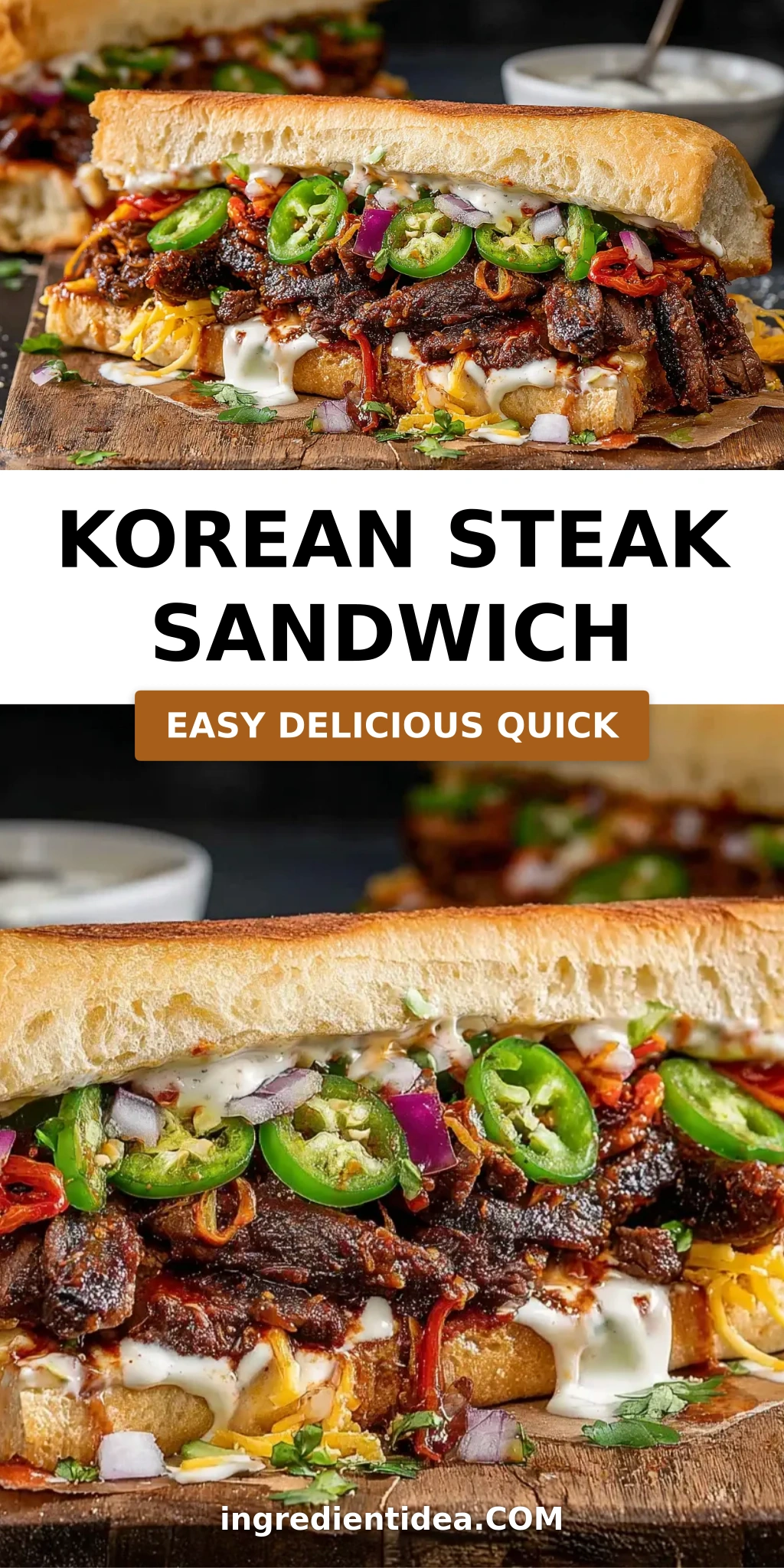
This Korean Steak Sandwich is bursting with bold flavor thin-sliced marinated ribeye, spicy jalapenos, sweet caramelized veggies, melty cheddar, and creamy garlic mayo, all stacked inside toasted bread. Perfect for a spicy, savory, totally unforgettable sandwich night.
Ingredients
- 2 medium or 1 large ribeye steak (approx. 320g or 0.7 lb)
- 2 tbsp soy sauce
- 2 tbsp gochujang paste
- 1 tsp minced ginger
- 2 tbsp light brown sugar
- 2 tbsp rice wine
- 2 garlic cloves, peeled and minced
- ½ tsp black pepper
- 1 sweet apple, grated (no need to peel)
- 1 tbsp toasted sesame oil
- 1 tbsp oil
- ½ red bell pepper, sliced
- ½ yellow bell pepper, sliced
- 4 thick slices of bread (e.g. tiger bread, approx. 6575g each)
- 2 tbsp salted butter, melted
- ¼ tsp sesame seeds
- 75g (2/3 cup) mature cheddar cheese, grated
- ½ small red onion, sliced
- 2 small jalapenos, sliced
- 3 spring onions (scallions), sliced into thin strips
- 3 tbsp mayonnaise
- 1 small garlic clove, minced
- 2 tsp sweet chili sauce
Instructions
- Place steak in the freezer for 30 minutes to firm up. This makes it easier to slice thinly.
- Once firm, slice the steak into thin (2mm) strips.
- In a bowl, mix together soy sauce, gochujang, ginger, brown sugar, rice wine, garlic, black pepper, grated apple, and sesame oil. Add steak slices and marinate for 30 minutes (refrigerate if marinating longer).
- Heat 1 tbsp oil in a large skillet over high heat. Add the marinated steak and cook for 45 minutes until caramelized. Drain any excess liquid as needed. Remove steak and rest on a plate.
- In the same pan, cook bell peppers for 23 minutes until slightly softened.
- Brush melted butter onto one side of each bread slice.
- On two slices (butter-side down), layer cooked peppers, steak, sesame seeds, cheese, red onion, jalapenos, and scallions. Top with the remaining bread slices (butter-side up).
- Cook sandwiches in a skillet or sandwich press over low-medium heat for 23 minutes per side until golden and cheese is melted.
- Mix mayo and garlic for the sauce. Open sandwiches slightly and drizzle with garlic mayo and sweet chili sauce. Serve immediately.
Nutrition
- Calories: 680 kcal
- Sugar: 10 g
- Fat: 38 g
- Carbohydrates: 45 g
- Protein: 40 g
Tried This Recipe? Leave a Comment!
Did you make this recipe? I’d love to hear how it turned out! Please leave a comment and a rating below. Your feedback helps other home cooks and supports cheerychop.com!
For more delicious inspiration, follow me on Pinterest!